Nicole Sachs on Chronic Pain, Fixing My Back, and The Magic of Her Work
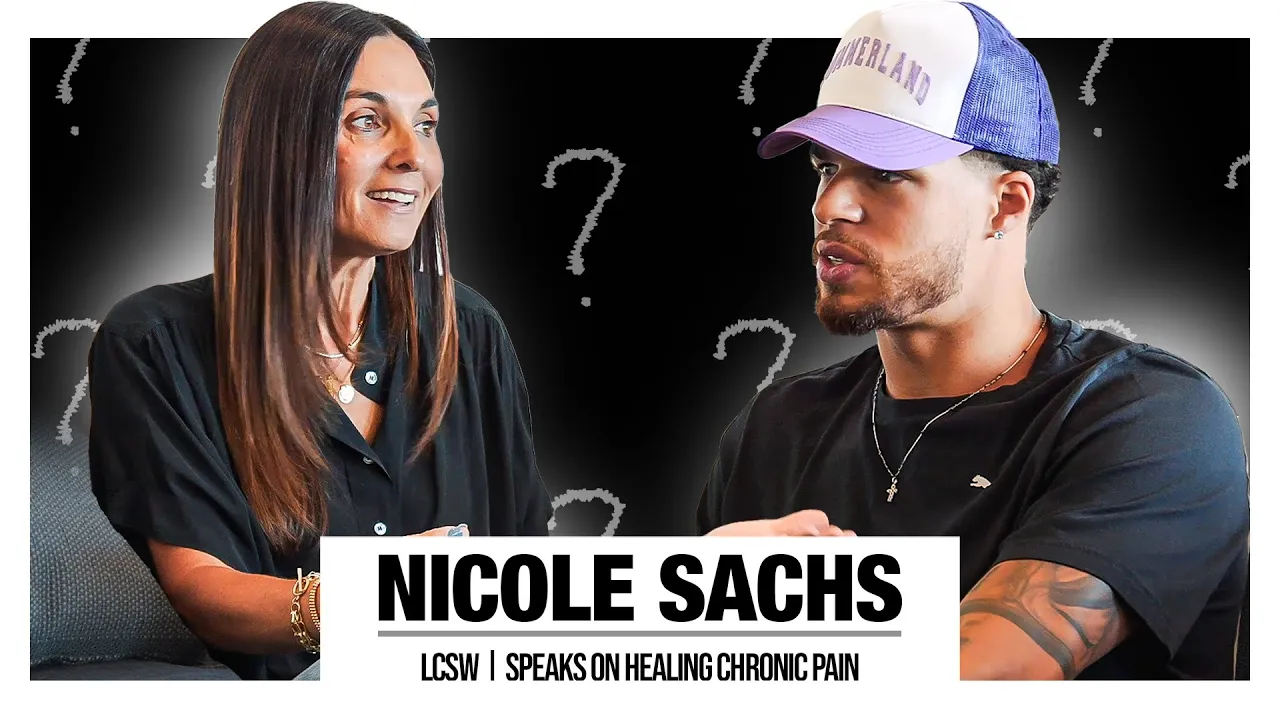
Chapters
0:0 Intro0:18 How Michael met Nicole
3:0 Nicole breaks down her personal story
5:48 Nicole explains the basics of mind & body connection
7:43 Michael asks Nicole about the range of chronic pain and timeline of diagnosis
10:22 Nicole claims we are failing to cure chronic pain
16:47 Nicole breaks down the three facets of her work
19:25 Repressed emotions and manifestations that turn into physical pain
20:55 Nicole talks about the most common forms of repressed emotions
25:7 How Michael learned to self heal
26:42 Journaling and lowering your self reservoir
37:35 Introducing Cam and his experience
42:12 Resistance isn’t a decision, it’s linked to brain science
47:16 Michael on helping the Christian community
54:13 Being intentional to see change
60:10 The brain and neuroscience
67:2 Nicole on how society is progressing
71:35 Why showing emotion is healthy & normal
73:56 Nicole tells a life changing story
77:54 Closing thoughts
Transcript
What's going on, y'all? This is another episode of Curious Mike. I'm here with my dear friend, Nicole Sacks, who has actually been on the show before. And I'm here with my boy, Cam Michaels, first time appearance. Me and Nicole did an episode about two years ago, and this woman quite literally saved my life.
I showed up in her DMs, struggling, not really able to move. This is after my third back surgery, and I'm feeling really hopeless. I was going through a stint of severe pain. If anyone knows my story, you know that I've dealt with the back injuries throughout my career. So this is after my third surgery, and I am literally not able to move on a couch for 10 hours in the day, doing research, figuring out how I can heal myself, what I can do to get better.
And I stumbled across Nicole's work. You know, I've always been someone who has, you know, the physical work has always come easy to me, you know, doing the rehab, doing the things that the strength coach says, you know, my diet, all that has been on point my whole career.
So I couldn't figure out why I wasn't getting better, you know, three surgeries in, I'm like, man, like, if my career like is in jeopardy, you know, I didn't know if I'd be able to go out there and play against the best that best athletes in the world on a night to night basis, feeling the way I was feeling.
And so I came across your work. And we have a podcast episode that details a lot of this, but I came across her work, shot her a DM, researched her on YouTube. And this woman, like I said, changed my life after meeting her. And she actually pulled up to my house.
And it was a weekend from you moving into LA. And I was out here for the summer. It was like divine timing. It was very aligned. Exactly. Yeah. It was very divine timing. She pulled up while I was laying on the couch, not able to move when we had a conversation.
And I worked through these steps with her and I was healed. And for the last two seasons, I have played 81 out of 82 games. And then last season, I think I played 79 out of 82, which was the most on my team. And that is after three back surgeries and dealing with chronic pain since I can remember, you know.
So welcome, Nicole Sachs. And thank you for those of listeners who did not listen to our first episode. Why don't you recap a little bit about what it is you do and how you were able to help me? a little bit. Yes. First, the first thing I have to say, because I feel like really dumb as you're telling this really sad story about how you've had three back surgeries and you're laid on the couch and I'm smiling ear to ear because I know how this story ends.
And I remember meeting you and thinking, is there, is it possible this guy is going to pick up what I'm putting down? And when you did and really ran with it, I just, I appreciate you. So thanks for having me back on the podcast. So yeah, let me just talk a little bit about what I do.
I'll start briefly, briefly with my personal story, just so people know that I really qualify. When I was 19, very similar to the first age, you got your first back problem. My back went out completely. I was at college. I had to come home. I missed final exams. And my parents, as any responsible parent would, you know, x-rays, MRIs, orthopedic surgery consults.
And I was diagnosed with a structural finding called degenerative spondylolisthesis. And I was told, all right, no more exercise, no more sports, no more travel. You know, you have to be very careful about what you lift. And the likelihood that you'll have a biological child is slim to none.
Like it was a crazy thing to hear at 19. And they were not recommending surgery because I wasn't in professional sports. I was a kid who just like living regular life. But they said, one day you're going to need spinal fusion surgery. And there was just something in me, you know, you can call it a spiritual awakening, whatever it is, where I was like, I just feel like there's more.
But I didn't really know where to put that. As I moved through my life, I went to graduate school. I started training to be a therapist. And I came upon the work of Dr. John Sarno, who I believe you came upon before you came up to mind. John Sarno's book, Healing Back Pain, was the first introduction to that line of work that maybe my problem wasn't a physical issue.
It wasn't a structural issue. There could be more to the story. That was my first kind of like inkling. But that was a year before I DM'd you, because it seemed at the time very, very, like most people that will feel like very kind of off putting kind of like, is that really, can that be possible?
So it took me a year and another surgery and another bouts of pain to finally circle back. It was my last hope. So reaching out to you was after reading Dr. Sarno's book and you were his... I was his, well, I came in as his patient. So I started young as his patient.
And I was in a very desperate way. And through working with him and understanding the brain science, which I'm going to touch on in a second, behind why we have chronic pain in the first place, I was able to actually evolve his theories. And I started lecturing with him at NYU.
And I did that for years. And then when I was in private practice, I started taking his patients as my clients. And working in total partnership with him in order to really help people pretty much until the day he died, until he left practice. And so I'm going to give a little primer.
Just, I know people could go back and listen to our episode. Yeah, no, no. I would love if you could recap the specifics and the brain science. Yeah. So like for a guy like Michael or for a girl like me, when you have a structural finding and you have terrible pain, it's very hard to hear at first something about the mind-body connection.
Because I think it confuses people and they think maybe, are you saying the pain is in my head? Like, are you saying I'm making it up or I'm at fault or I'm hysterical or I'm overly sensitive? So I always start with saying, the pain is not in your head.
There is brain science behind why the human body feels anything. So like, I could lecture to a room of a thousand people and I could say, raise your hand if you've ever been stressed out or overwhelmed and you get a headache, right? Everybody's hand goes up. And I'm like, okay, keep your hand up.
If you ran to the ER that night for a CT scan of your brain, like you thought you had a brain tumor. And everyone laughs and they put their hand down. And I say, what I'm teaching you, and this is so key to get people's resistance down. What I'm teaching you, you already believe.
You already believe that stress can cause a headache. You already believe that you can get like broken up with or get bad news and you lose your appetite. You already believe that when you're really sad or moved, water falls out of your face. You cry. Like what's a more basic mind body interaction?
So it's, it's nothing new, but chronic pain comes hand in hand with fear, meaning and giving away our power because we have no choice. So this is nobody's fault. And so what I help people understand is that pain by its very nature is protective. So like in the early humankind, if you cut your arm and you didn't feel pain, you wouldn't clean it.
You wouldn't take care of it. And it might get septic and you might die. So pain is here to stop us in our tracks and say, you have to take care of yourself. Those are the brain signals that are going on when pain becomes chronic. Got you. So in my instance, it was back pain.
Your instance as well. Tell the people a little bit about the extent of what we're talking. We're not talking about just back pain, just headaches. We're talking about pretty much anything chronic. And that ranges from chronic anxiety, chronic depression, chronic fatigue, chronic, you know, back pain, knee pain. You know, you had a surgery on your knee and for some weird reason, your knee is not getting or the other knee starts hurting.
Yes. I remember at the similar time, my foot, I had the plantar, plantar fascia. I started doing her work and that slowly started dissipating like crazy. And talk a little bit about how, so if someone goes and gets an MRI or they've had surgery and they're like, I know that I'm bone on bone.
I know that I have a bulging disc. You know, I know that, and they have real justifications for why they're in pain. Talk about what is like a normal, um, like timetable for healing before it becomes chronic and before it has something to do with the mind-body interaction. No, it's, it's a, it's a great question.
And actually it's the only reason you even missed those few games last season is you like sprained your ankle, I think. No, I got a hamstring strain and it was a normal healing time. Exactly. So this is what I'm saying. I am not saying that there is a mind-body connection for acute pain.
We pull our muscles, we hurt ourselves, we cut ourselves, we break bones. There's, I love the medical model. I love Western medicine. Heal me, right? Like give me a cast, like give me an antibiotic when I have an infection. That's not what we're talking about here. We're talking about once the medically agreed upon time that something should have healed is over.
And oftentimes with chronic pain, it's over for like months or years. Yeah. Or if a finding that you're, they're seeing an MRI, they're, they're considering it degenerating, which I know is like one of the things, you know, you have to take a look at pausing right there and getting curious about why these pain signals keep firing.
So, you know, one thing that I think is kind of an interesting way to frame it that I've sort of started bringing in is there was agreement at one point in our global society, whatever you would want to call it at the time that the earth was flat. And the reason there was agreement that the earth was flat is because it was all you could see, right?
And so who could blame you? Like you rode your horse from here to here and the earth was flat. And if you lived near the ocean, you looked out on the horizon and it was flat and everyone you knew agreed with you. And what I really think, and this is probably the most impactful thing we can communicate in this episode is we are in a flat earth moment when it comes to chronic pain recovery, because it is failing.
The opioid crisis is epic. The ineffective, ineffective nature of surgery to cure pain, you know, surgery can repair an ACL. But so many times, five years, 10 years later, oh, that's my bad knee. I can't do stuff because, you know, these pain signals are a result of a brain and nervous system in long-term fight or flight.
And that's why it doesn't matter if it's IBS or chronic fatigue or migraines or fibromyalgia or back pain or shoulder pain, because where it ends up, the signals end up going are somewhat immaterial. And I know this can be triggering for people, but when you pause and learn, when you don't use your resistance as a bar to curiosity, you will start to understand it will make perfect sense.
And that's when you really change your life. Talk a little bit about, okay, for the people that feel like, for me, I've had surgeries, they've, they took part of my discs out. People may have bone on bone, people may have what is considered a normal abnormality. We've talked about that where like, people can't wrap their mind around the fact that even if you've had surgery, even if you do have bone on bone, even if you do have, you know, like, you're off balance from side to side.
I remember I used to get so caught up on the fact that like, I would go to the chiropractor and they would say my hips were slightly off. I would start to feel that and I was so like, fearful and scared of it that my back starts hurting, you know, like, I remember the first time I went to the chiropractor.
And they said like, or it was a doctor and they said I had degenerative disc disease. I remember from that appointment on somehow my pain just got worse and worse and worse. And it was the fear and it was the like anxiety surrounding it that I felt like tightened up my muscles.
So talk a little bit about what is normal abnormalities and also what actually is causing the pain. Is it muscles tightening because of the fear, the flight or fight response? What's actually happening when people feel really stiff in their back or like their knee is really sore and hurting?
Is it the inflammation that comes with being in flight or fight or what actually is happening? So I think the first thing, like, we'll just do like a tiny neuroscience lesson. The first thing that I didn't understand until I really dove into this is when you burn your finger, when you burn your hand, you don't feel pain in your hand.
Here's what happens. And this is just agreed upon science. You burn your hand and the nerves in your hand send a message to your brain. And the message says one thing, the sensory environment has changed. Something changed down there. Now in your brain now we have to interpret, is that change good or bad?
Because sometimes when you get a message in your brain that the sensory environment has changed, it's because you're having a massage and you're like, oh, that's really good, right? But when you burn yourself, what the sensory environment has changed means is there's danger. Burns could cause infection. They could cause tissue damage, whatever.
The brain makes sense of that based on its interpretation of your perception of the problem. Okay? So when you burn yourself, first of all, you know, burning yourself isn't good. Second of all, it hurts. All this information goes up to the brain. What the brain does is it sends pain signals.
So even though it's expressed through your finger, you are feeling it in your brain. This is something that people are like, you know, it blows their mind. So what happens when you are told that something is wrong with you is that you will start to attach meaning and dread and fear to the thing, especially a person like you who uses your body as your career and uses your body as your hopes and dreams and aspirations.
And so all of that gets attached with a dread like, what if I can't do this anymore? Or what if I'm going to be bad at it? And then what will that feel like? Well, that'll feel like humiliating or like all the things that happen. And so if we can understand that our perception is our reality, if you are walking down the street and you see an outline of someone and you think they have a gun, your body is going to do the exact same thing, whether it's a bush that in the shape of a gun, or it's a person who's actually out to harm you until your perception changes.
So like once you walk down the street and you're like, oh, it's a bush, it's going to take a minute, but like everything is going to calm back down. The problem with chronic pain is it keeps us in fight or flight. You're perfectly, you articulated that great. Because I remember I was told so many times, once they figured out I had back problems, they were like, don't be very careful when you pick something off the floor, be very like straight back and pick it up like that.
I remember I would be so careful everything I did. Don't sit slouched. Don't sit, you know, you have to keep your posture. Like I was told so many things that would harm my back and I'm living my whole day. I'm going about when I get out of bed, I'm rolling onto my side.
I'm pushing up. I'm being very careful about how I get out of bed. I'm very careful about how I sit. All these things until I got to the point where I 100% agreed with what you were teaching and it freed me to do anything I wanted to do with no fear.
I don't even think about when I pick some off the floor that I got to keep my back somewhere. I don't even think about how I sit. I'm chilling, you know, like, but it took me a while to really get to that place of 100% belief in the work to where I can just live free.
You know, if something happens in the game and I get hurt, cool. I know it's going to subside. I know that if I, we play two games or four games in five or six nights or whatever it is and my back's a little sore. I know that's normal acute soreness from working out and it's going to subside after a day or two, but it took real belief, I feel like, to get there.
I had to really get out of that fear mindset. How do you feel like, because I feel like, you know, I want to get in a little bit into the journal speak and how people can, and, and, you know, you know, the reservoir, but a lot of it is just belief that nothing's wrong with you.
How much of healing is belief in this work? And then how much is actually doing, doing the work to lower that reservoir, which I want you to touch on next? So, and I think that like eventually when we all, when we all start talking, the, the, this will bring us all together in a sense.
There are three facets of my work and I look at them like three legs of a stool. So without all three legs, the stool is not going to stand and it's believe, do the work, journal speak, and patience and kindness, self-compassion, understanding the goodness in you. Now, a lot of people look at that third leg and they're like, yeah, that's okay, fine.
Like I'll believe, you know, I'll read about the neuroscience, Nicole, and I'll like, you know, listen to your podcast and I'll marinate in the material and I'll listen to Mike. Self-compassion shirt, cute. You know, that's like for hippies. And what I want to say is that all three legs need to be strong and nurtured in order to stick, for the stool to stand.
So let's talk about belief for a minute. Once again, we're going to dip into neuroscience. And I think the reason why I lean so hard into science is because when people understand that I'm not making this up because it's like, would be like a really lovely way to look at life, they can kind of quell their skepticism and their attachment to diagnoses or the medical model.
So in terms of neuroscience, the human brain seeks what it can predict, which is why you are more likely to warm to a situation that you've done before. It seeks the familiar. And so in that way, we learn to believe by exposing ourselves over and again to the new thing that we intellectually know we need to learn.
That's how a kid can learn calculus. And that's how we can learn about this mind body science. And so in terms of believe, honestly, the best thing to do is to listen to the success stories. I have hundreds of them on my podcast is the end of every chapter in my book, Mind Your Body, which just came out this year, is another person's stunning move from total fear and often disability to full freedom.
Michael is the end of one of my chapters, which is super, was super fun for us to work together on. And, um, so like, that's the best way to go to believe. Learn about the neuroscience, which I also teach in the book and listen to people just like you.
That's a thing. It's a similar, and you know, we're going to introduce you in a second, my boy, you're not just- You're being so patient. He's being so patient all day. But it truly is in his, in his line of work and your line of work. I feel like to get people on board, it is individual testimonies.
It truly is. When I sat down and I listened to people that had stories just like me that were healed through the work, that was what got me really thinking it was possible for me to heal. So belief is such a big part of it. Compassion for yourself. Talk a little bit about doing the work in the journal speak and a little bit about the reservoir that builds up and really, really what we're talking about.
What we're talking about is repressed emotions and how they can manifest as physical pain. They can manifest as anxiety. They can manifest as headaches. They can manifest in so many different ways. Talk about that and talk about how you can lower that reservoir and you can start seeing some progress and some healing.
So like, I think the best way to talk about it is inside each of us, you can just imagine like a clear science beaker. Okay. And inside, and I call that the emotional reservoir. And inside of that is everything that we don't have time or capacity to feel. And like, you know, people talk about defense mechanisms.
Well, the reason they're called that is because they defend us. We have them for a reason. So repression in its very nature isn't bad. It is helping us get through the day. Like think about your day and the different frustrations that come in. If you had to feel every way that that triggered you, by the way, every way it reminded you of your childhood, of your pain, of every time someone made you feel small in the same way when you were a kid and powerless, you would be paralyzed.
You would not be able to get on with your day. And so as a very natural way, we unconsciously repress a ton of emotions. And the most, the ones we repress the most are the least convenient, grief, rage, shame, despair, and terror. Those are the big five. So not like I'm a little freaked out.
Like I'm terrified or not like I'm pissed off. It's like I'm enraged. I might be scary if I show you how angry I am. These things are considered unsafe by our brain and our nervous system. And you have to realize that the brain and the nervous system have one primary purpose, which is to keep us alive.
And so if there's a predator threatening our lives, which it actually is perceived as that when the emotional reservoir starts to overflow, the brain is going to do whatever it needs to do to protect you. So let's just give a little example, okay? You're feeling really angry about something.
See, it's interesting for guys versus girls, but it's both bad. For guys, if they perceive themselves as being as angry as they might feel, they could get really judged or at the worst like case arrested for being enraged. Men are seen as scary. Women are seen as shrill, unfeminine, unappealing, like if they start getting angry.
So no one in society is allowed to be angry. And you start feeling this rage building, right? And your emotional reservoir starts overflowing. What's going to happen? And this is nuts, but it's true. Your brain is going to sense danger the way it would if you were being pursued by a predator.
It's going to go into fight or flight. And when the brain goes into fight or flight, it starts to seek ways to protect you. So if you were running from a predator, that way might be you could like run faster, jump higher, um, freeze more still, right? But if you weren't running from a predator and your brain logically knows that you're not, what can it do?
Well, if you're so angry, you're worried that you might react and you get a migraine and you're throwing up, or if your back goes out and you're laying on the couch, you're safe. And it sounds nuts, but it is actually the perception of your brain that you are safer from yourself.
It's like protecting you from yourself. So the reservoir is overflowing. And that is what leads us to need to figure out a way to dip a ladle in the reservoir and dump it out. So you're, you're saying literally that you, us as humans, our mind, we would rather feel a physical manifestation of repressed emotions, whether that's a headache, whether that's pain, we would rather feel that than feel our feelings.
Well, rather is an interesting word, right? We have to dip into vocabulary here. I think most people who have terrible chronic pain would be like, you're crazy. I wouldn't rather be like on disability, but your brain would. And that's where we have to rewrite these neural pathways. And lucky for us as humans, the brain is plastic.
It changes and rewrites until the day we die. So you don't have to worry that you're too far gone. People write me and they're like, I'm in my 80s, can I do that? And I'm like, yeah, you can. You know, if you have years left to live, or even days left to live, you can do this.
And so your, your brain's perception is these repressed emotions rising. Now let's talk about another one, grief, shame, despair. If my despair rises to the point where my brain perceives it to be unsafe, you know, might I be in danger of hurting myself? Now, it may or may not be true, but your brain, if it perceives the danger, is going to protect you.
And so what happens in this process is that it sends a message of inflammation. It sends a message of muscle constriction or spasm or neuropathy. And then you feel it. You know, the sensory environment has changed. There's danger, you feel the pain, and then you adjust your life accordingly.
So now you make your life smaller, you're gentler on yourself. You don't have to draw so many boundaries because like you might want to say no, but you don't have to say no, you're sick. You like, it's almost beautiful. Like it's almost poignant to realize what a perfect system we have, where if it thinks you're in danger, it's going to protect you like that.
And so the way I teach people to get out of it, and the way Michael was a warrior at being willing to just say, "Fine, I am sick and tired of being sick and tired. I don't want to live this way. I want to play basketball. I want to thrive." You're so young.
Did I meet you at 24? Yeah, I believe so. I mean, like I have a 23-year-old daughter. Like it's like nuts to me how young you were. Three surgeries in at 24, three surgeries that were unneeded, I would say, after doing your work, unneeded, you know? And part of that is mourning that.
Part of that is saying, you know, my favorite Maya Angelou quote, "When you know better, you do better." Like you didn't know. So like there has to be compassion for, "Okay, I did my best in that moment, but now I'm learning something, and I'm going to take my power back." Because this is not to be against doctors or chiropractors or practitioners of any kind.
It is about knowing that the real expert is you. And when you learn that, and when you have the tools to go and go in there and do what you need to do to lower the reservoir, you live like Michael lives. He's got the same degenerative disc disease. I promise you, if you were MRI'd today, I at 53 have the same exact MRI.
I've had three children. I exercised till the day they were born. I can run five miles on the beach. I can lift anything I want. I never worry about how I bend over and pick anything up. And any doctor who still sees my MRI, they go a little pale.
They're nervous. They're like, "You're messed up." And I'm not. It's a normal abnormality. We look different on the outside, and we look different on the inside. Right. So talk about, talk about what I had to get in. What did I, the journal speak. Talk about lowering that reservoir and the process about it, and talk a little bit about the resistance that may come.
Yes. Okay. So one of the things that I almost find comical when we get to this part of the conversation with anyone is that I'm going to tell people you can relieve your chronic pain through journaling through intuitive writing. And that, I get it. I almost step outside of myself.
I'm like, "That sounds nuts." So I guess the best way for me to say it is when Dr. Sarno said it to me, and he didn't even necessarily tell me journaling was the only way. He just said, "It's a really good tool." You quiet down. You get in there, and you get opportunities for epiphany that you might not get if you were talking to a friend.
Epiphany. I love that word, epiphany. And I love doing it for 15 to 20 minutes, because you may come to an epiphany on minute 16 or 17 when your phone's away, and you're just writing for that long. You may come to some realizations about your childhood, about things that you haven't fully felt in there.
That word epiphany, like, means a lot to me. But yeah, continue. Well, because it really wakes you up. And right, like, we all have to sort of wake from this slumber. And it's not our fault, the slumber, but it's the way we've been raised in the Western medical model that, like, if you have a physical problem, you need a physical solution.
And so what journal speak does, so essentially what we're doing when we journal speak is we are putting a ladle in the reservoir and we're dumping it out. And what I think is really important for people to realize is, when the emotional reservoir is not overflowing, when it's like, no one's ever going to empty the whole thing.
We're human beings. But when it's below that critical state, you will not have pain. I can almost say you cannot have pain. And here's why. Pain signals need to be intentionally sent from your brain and your nervous system. And if you're not physically being triggered, and you're not emotionally being triggered, you will not have pain.
Like, I know you, Michael. You go through most days and you don't have back pain. And this is what I'm, and it used to be the biggest thing in your life. My teammates literally today were like, "Mike, you have to tell me." You know, we got done playing like 10 pickup games.
We did conditioning. Then we lifted and my back was fine. And they were like, "Mike, you got to like, how is your back? Okay. You got to show me what you're on. You got to show me your protocol." I'm like, "Okay. Like, I'll show you what I do." You're not, you're not, you're not going to like, it's going to be different than what you think.
But it's the truth of why I've been able to have three back surgeries and feel fine in my back, you know? And it's, it's the journal speak, which I was religiously doing. After we met that one day and I was laying on the bed, they told me about the journal speak and lowering that reservoir.
I was religiously journaling. For me, I was typing, you know, I was typing on my computer and trying to go deep and figure out those emotions. But it's not a normal journaling. It's not a passive journaling. You are like trying to- It's like a hysterical temper tantrum. It's not like a document you want to save.
No, and it's not a document you're allowed to save. So Leah, like tell them, like for you, what was your first journal speak? What was the realization that you came to that lowered your reservoir? And how is this journaling supposed to be? Because people hear a journal, they may think, you know, just talk about your day, talk about how you've been.
No, this is like trying to let it all out. Yeah. You know, it's really funny. In retrospect, I created journal speak so many years ago that it is what it is. But I almost regret having the word journal in the name because it isn't regular journaling. Okay. So essentially Dr.
Sardo and I met, he looked at my MRI. I was really young and he was just like, okay. He's like, I get it, how scary this looks. He said, there is no way that this abnormality is accounting for all the different ways you just explained your pain. He's like, you could go to the best doctors in the world.
They're not going to admit that it is. He's like, so I'm going to tell you what's really going on, blah, blah, blah, blah, the brain science. And he's like, you need to get into this reservoir. So he tells me to journal and make like lists, make lists of like my daily, daily life, like just an inventory, what's going on, what's pissing me off, what's upsetting me.
And then like make a list of my childhood or my past stressors and make a list of my personality characteristics that might be getting to me on a daily basis, like perfectionism or people pleasing or being your own worst critic. Okay. So I make these lists and I'm like, okay, you know, I'm just so desperate for help and I'm following, you know, his guidelines.
And my story, it's important to say, because otherwise it would be confusing for a new, new person. My story really happens in two acts. My first act was that I understood Dr. Sarno's work. I sort of half read, kind of skimmed healing back pain and I got it enough to move on with my life, get my graduate degree and have two out of the three of my children.
Then when my son was 10 months old, I wasn't careful about lifting his little baby walker. I felt, I felt a pain through my back that took my breath away. And I went into a shame spiral that you could not imagine. Like I've done this to myself. I wasn't supposed to have the kids.
Now my back was out. And I went through a year of horrible chronic pain, just like, you know, um, on every muscle relaxer, like, like steroids, like painkillers, crying myself to sleep at night, not able to lift my kids, not able to properly parent. That's what brought me into Dr.
Sarno's office live. So that's where you find me with the whole journal speak thing. So he's telling me to journal. I'm like going through all these topics and I feel like it's a whole lot of nothing. I feel like I'm playing my tapes. I'm writing, I'm tired and I have babies.
And like, it wasn't that I wasn't tired, but like nothing felt revelatory. Nothing felt like an epiphany. And then one day I'm writing about motherhood and I'm writing all that, those tapes. And I had, and this definitely, there's no other word for it, but then a spiritual awakening, there was a voice and it came to me and it was not my voice.
It was a voice that said a sentence that I was not wanting to hear. And I feel like in that moment I had an openness that I honor because I said to myself, there is something going on in there that is different, darker, deeper than what you think. So listen to this epiphany, listen to this revelation that's coming in.
And the revelation was, I hate being a mother. It was the ugliest, most unwelcome sentence. It didn't make sense to me because I'm such a maternal person and I've been desperate to be a mother for so long, but I had the bravery to write it down. So I wrote that sentence down and I, it was gut wrenching.
I almost feel like I was going to be sick. Like it was really, and I said, fine, let's go. And I replaced my fear with curiosity and I went and I was like, I hate this. I'm terrible at it. I'm failing. I'm a pain. And then I really went darker.
I had the wrong children. My daughter doesn't look like me. This wasn't the plan. And it, I took, I just stopped worrying. I knew that I had the right to throw this out when I was done. Nobody was ever going to see it unless I showed it to them.
So I just went hog wild. I just started writing the truth. But what's so important that people understand is that journal speak doesn't stay true. So as I'm writing it, what started to happen for me is I started to realize, wait a second, this doesn't feel true either. I don't hate my kids.
Like what's, what's in there. And I started to be more curious and more curious. And what I came to was that when I was little and I was really scared and sad and feeling alone, I made this really quiet promise to myself that one day I was going to have my own family and I was going to be in charge.
And I was going to be the perfect mother. And I was going to have this beautiful thing. And it was going to heal like the wounds of my childhood, which is as sweet as it is, like a really preposterous thing to think. Like you can't heal your childhood by having babies.
Like anyone who has a kid, I don't know, Cam, do you have kids? Yeah, three of them. Okay. Sir, you understand what I'm saying. Yeah. Well, it puts a lot of pressure on you too. That puts pressure on you as a mom to totally heal your own wound with that.
Not only does it put pressure on you, it is the most ridiculous notion that these like self-centered new humans that are trying to find their way in the world are going to be so perfect and loving to you that they're going to heal that little inner child inside. So anyway, all that to say I went wild.
I came to a place of real compassion for myself. I really did. It was like when you're cried out and you're like wrung out on the floor and you're like, "Oh, I see." Like I feel peace. And I understood all of this stuff that had been going on inside of me.
And I saw my children for who they were. Not some function of me, but like these beautiful little people who are making their way in the world, they were one in three. And I woke up the next morning and my back pain was 80% gone, never to return. This is over 20 years ago.
And then I was like, I found the answer and I started journal speaking. Okay. In this like expressive, unapologetic, five-year-old tantruming inner child way, like playing with truth. Like, do I hate this? Maybe I hate it. Let's talk about what if I did. Do I, am I desperate for it?
Like playing with it. And within a couple of months, my chronic pain was totally gone and never to return. And this is the tool. I was the same way. I was in my room typing, writing away, trying to explore everything that I really think. Not the things that people tell you to think, not the ways I'm supposed to feel about basketball or I'm supposed to feel about this and that.
I started writing about how I really feel about all the lists that, that there was three lists, I think, uh, characteristics. It was like childhood. And then there was another one. I started using those as prompts and getting deep and doing that inner work that people talk about, but a lot of people don't really do.
When you really dig in deep- People don't even know what's in there. They don't. They don't. If you sit down there and write for 15 to 20 minutes- 20. 20, oh yeah, 20. And you really try to dig deep, you will come to some realizations about yourself that you never even knew were in there.
And that's what happened to me. That's my same story. Every single day, my back got a little bit better. I've never had a back spasm to that extent, to where it takes me out for days. I haven't had it since. And I'm, I have no fear that I ever will again.
Um, so we, we both have two really amazing stories. At the end of this podcast, I may want you to share a couple other amazing stories that you've encountered, but I think this is where I want to introduce Cam. And I want you to tell a little bit about what made you want to call me the other day and talk to me about this.
What was your personal story with this kind of stuff? And what made you be intrigued about this? Well, one, I, I called you cause I'm, you were starting to talk about some of this stuff. I think I actually asked you who your doctor was for your back surgery. And you're like, bro, it wasn't my, it wasn't the surgeon that got me in hearing, hearing about your, just your, your journey through this stuff, which I was like, bro, this is actually what I'm seeing in basically everyone's life that I'm working with right now is walking through.
I just call it fear, but it's these ways that we've repressed all the stuff. So I've had a bunch of experiences with it. And then the second I hear Nicole talk, I'm like all the confidence in the world. Cause you're like, this is actually what the brain brain does.
And so I started to see a lot of these stories of people who really made an agreement about themselves early on in life. They believed some kind of lie, usually through some kind of memory that they, they, they had, they experienced some kind of trauma that formed a real, a view of themselves, like an identity of how they saw themselves and learning to kind of walk through that with them.
This is by the way, it's like what the scriptures calls confession, right? Like, it's like, it's really funny because a lot of times we think of when we hear like confession, we just hear this like emotional, I'm telling God, I'm sorry or something. But confession is, it's what you said.
It's telling the truth. It's just being absolutely honest about what I believe about myself, the things that have happened, the things that I've repressed. It's what, it's like, it's what David says in Psalm 32, right? He says, when I kept silent, my, my bones started to hurt. Like he's like, my bones wasted away.
My bones wasted away. So there's this like beautiful picture of what everything you're saying. It's like, when I repressed, when I kept silent, when I said the things I felt like I was supposed to say, my body started to ache and hurt. So I don't know. I mean, in my mind, it's like, what kind of chronic pain is my guy, David talking about that?
He doesn't have that kind of language to say, but he's been keeping it down for so long. And so I had my own kind of experience through this. And then basically it's just experience, right? It's my own story being like, Hey, this worked for me. I'd love to kind of help walk you through some of these things.
And then same thing. You just start to see stories, not as much actually like physical pain, a couple. I mean, I had one. I mean, I had a, I started to have, I never had a nice beard, but I had a little, little neck beard, a little neared is what they call it.
But I had this. And all of a sudden, just like one day, I just started having this bald spot kind of creep in and it started to spread kind of across my face. And I'm kind of like, what's going on? Am I about to go bald? I go into the dermatologist.
They say it's this kind of alopecia. I'm getting a little scared. I'm like, this is about to come all the way across my, my head. And basically they told me they were like, this is a form of stress. Like you have some kind of stress in your body that it's like, it's an autoimmune thing that it's fighting back.
And so it's surprising that the doctors even went there. I'm impressed. I feel like if we're going in that direction, that makes me feel good. Yeah, hopefully. So, but so I, I just started to do kind of my own stuff. I'm like, what am I, the main question I'm asking all the time is like, what am I, what am I actually afraid of here?
Like what, what kind of stress am I maybe carrying in my body? And you just kind of pull on that thread. And, uh, I was journal speaking without knowing I was journal speaking, I guess, you know, just by myself writing some stuff down. I went through a couple kind of guided reflection and prayer times with, with my wife actually, and, uh, had a couple of memories that I like literally could not remember at all, but just they came out.
I was like, oh my gosh, I could not believe it's an epiphany. Yeah. It comes up. Um, in the memory, I realized that I'm, I became, I like became afraid of something and it was shame really. So I felt this shame in my body and in this memory. Uh, and this is what I think is amazing about Jesus.
I have this, uh, in the kind of prayer reflection time, I, I mean, he comes into the memory, like, and he restores and rewires the memory. So it's like, I have this memory. I, I walk out of this room and I'm ashamed and my head is down. And actually like in this memory, I don't know what kind of intuitive space I'm in my, in my mind.
This is epiphany at its like peak to me. I'm just crying tears. You know, like, I feel like I'm crying tears that, uh, whatever, seven or eight year old Cam didn't cry. You know, like I was just, I walked out, I walked out of this room and in the memory, Jesus just lifted my shoulders up, lifted my head up and basically just told me he loved me, but it wasn't like a, we know that it's like, God, God loves you, bro.
But it was an experience with that in this memory. And like two days later, my hair starts to grow back on my face. So it's just like immediately, but it's like, I was carrying this in my body and in my mind, it's just, I was just told the truth.
I found kind of what I believed about myself and I was just honest about it. And you don't want to go there. It's like so scary. That's the thing. You'll be resistant to going there, but this is where it's really important. People understand your resistance isn't a decision. It comes back to brain science.
Your resistance to quote, going there is because you haven't yet understood that going there is safe, which is why education and knowledge are the prescription at the beginning, because the whole believe part is understanding that we've had it all wrong. And, you know, we know about it in terms of like stories like, oh, you ever want to like fight the monster or the bully, you face them.
Like, we know that in like story, but it's actually the truth of the human system that we have to walk into those dark rooms and turn on the light. And we're not taught to. And that's my, my guy, David Goggins. I'm a big David Goggins fan. He said he starts his day off with emptying, emptying those cabinets.
Like yeah, the running, he does a hundred mile runs. He is one of the best in shape 50 year olds, like ever to live. He said he does his hardest thing first. And that is going into those cabinets and emptying them, them dark spaces and doing the mental work.
That is so much more brave and more strong than going and doing a tough lift or a tough workout. Like this, this work is not easy, but once you get to the point where you're willing to do it, you will see change in your life. For those of you that don't know, Cam is a pastor.
So he, um, he ministers to a lot of Christian people. And this seems to be an idea that is really kind of, I feel like the Christian church or religious people in general are very like, um, they're kind of like stuck in because they feel like they can pray, you know, praying to God and their pain goes away or pray.
But then when you, when it doesn't, or you, you don't get healing. Now you're questioning God. Now you're questioning if he wants the best for you. Now you're questioning, you know, is scripture true? It says, ask God for anything and he'll give it to you. But maybe you're asking for healing and it's not happening, you know, what?
And then they're not knowing that he kind of gives you the tools in scripture. If you read the scripture, like you said, it talks about confess and you will be healed. It talks about in Psalms, um, he's writing about his back was aching with pain. And then he, he was being silent, but he confessed to God.
He expressed his emotion, his, he, his guilt was lifted and his body was restored. Like there's all this imagery in scripture about this mind body connection, which even made it easier for me to buy into. Yeah, bro. Um, but talk a little bit about why you, cause you call me and you were like, man, like, like I love the pastoring thing, but this is really calling my name.
Like, yeah. What do you, what do you feel like that is? No, it's a great, it's a great question. I think one, people are extremely well-meaning, right? Like they, they're, they take scriptures, they want, they want to believe God for things. Um, but I think even the way we see God work in the scriptures is, is right in line with this.
Like he always actually, he never like picks us out of our pain and just drops us into it. He always is moving people through stuff. Like that's the whole narrative of scripture. So even like, I think of David in Psalm 34, he says, which is a promise of God.
He says, the Lord delivered me from all of my fears, which is like amazing. I don't know. Like, could you imagine a life where you're just like not afraid of anything? That's what he's kind of saying. But when he says this passage, he says, like he delivered me from my fears.
And so anybody who's like reading the scriptures, that word deliverance has a real connotation to it. Like there's a whole story to that word. Like deliverance is God moving the Israelites and the Hebrew people out of captivity and into the promised land. Right. And we know the story. So, you know, the story is not him dropping in, picking them up, moving them to the promised land.
Right. So it's, it's never that. I think that's a lot of times when we think of prayer, it's like, I'm going to pray it away. I'm going to pray and it's just going to get fixed. I think it's what God is always inviting us into is moving through this stuff.
Right. So that's the story, right? They, they move through a red sea. They move through a wilderness pain. And I'm sure they're suffering, suffering, suffering in that journey. The whole journey is this like, and it's belief, it's faith. It's like one step at a time. This feels so scary, but it's got to be better than where I've been.
So you just keep going and you keep walking. But that's what he's David's saying. I'm on the other side of that. He delivered me through this journey from all of my fears. And so I think when we think about the way God wants to answer prayer or move in our own lives, it's always through stuff.
And that's the story of Jesus too. He moved. He doesn't just like come down as like, I'm going to save the world. It's through his like death. It's through the cross. Like it's through this painful journey that he lives and displays for us. So it's, it's always moving us through things.
And so honestly, even when we hear, when I hear Nicole talk, I'm like, of course that's how it is. Why would that be surprising that we have to move through our pain to get to freedom? That's the whole like kind of biblical story. It's how it's how we're wired as humans.
Yeah. That's the, yeah. So it makes, it makes actually total sense now, but it's a different way of looking at things. It's a, it's a different perspective shift. Yes. And I feel like it, your goal is to bring this into the medical world and make it more like, um, accepted there.
And I feel like one of my goals, one of your goals is to help the Christian community who there's so much hurt. There's so much pain. There's so much chronic anxiety. You're like, man, why as a Christian, if I really have faith in God, why am I dealing with anxiety?
Why am I dealing with this? You know, it's funny because like other countries don't deal with this as much as the Western world. And a lot of it is because they are willing to put their phones down, spend time in meditation, spend time internally going. They know them. They like, they're getting to know themselves.
They're, they're honest. They're not putting on this facade that people here like to put on. They're not like playing that perfectionism role. They're not, their whole life isn't about grind, grind, grind. I got to fake it till I make it. I got to be somebody. They take the time in a lot of these countries to sit down, self-analyze, do that deep work.
And it shows in the fact that here in America, here in the Western world, we deal with so many issues that in other places aren't really as, isn't that, is that, am I, isn't there like some stat that like, I remember you telling me about how like whiplash or something here.
I forget what that story was. I don't want to quote anything that I can't quote perfectly, because that was something I think I remember reading like very specifically when we met last on the podcast, but there's something along the lines of like, I think it's in Sweden. Like it's, it's in maybe in Scandinavian countries, like something like there's no such thing as whiplash.
Like they don't understand, like that's not in their vernacular. Yeah. And, um, but, but what I do want to say about this whole thing of newness. Okay. There's no sect of society that is more rooted in tradition than Christianity. Right. They're just eons of tradition and writings and texts.
So I come to it with a lot of compassion, which is, yeah, it's going to be really hard to embrace something new. So the one thing I want to say to inspire kind of you both when you're in this Christian community or in these conversations is the same way I look at the medical community.
This is never going to be a top down change. This work that I teach, I mean, I mean, obviously it would be fantastic. I don't think is going to come from the medical model, the surgical model, or big pharma. Maybe one day it will, that would be fantastic. But I think this change is really going to come from millions and millions of people who hear something like this podcast and say, I want to change.
It is going to be a groundswell of people that say, I want to change my life. And that's how you can inspire people one at a time. And then to me, what happens is we reach a tipping point in society where enough people are having this conversation. I do really think we're getting there that then the institutions can't help but listen because their flock is saying, but wait a second, I was in terrible pain and now I'm living a full life.
Don't you want to hear my testimony? Don't you want to hear? And I feel like then there will be probably like the, the less rigid parts of every type of society that say, okay, let me at least hear you. And that's what we're doing with podcasts that we're doing, we're doing with non-traditional media.
We are bringing messages and stories. Storytelling is our greatest gift as human beings. It's funny. I don't even know if it's the, I think it's sometimes spiritual community has such a hard time because you have the quote unquote truth. So, you know, the right answer. So you, I don't know.
It just, so it feels really hard sometimes to get someone to write down what you wrote down where it's like, but this is actually what I believe because you kind of know that's not a good thing to say and I'm not supposed to say that. And so I think that's, I think that's one of the things I see a lot is people who know the right answers.
Like I know God loves me. Well, the right answers, right? Which is quote unquote, the expected answer. And that there is a voice, I believe that there's a voice inside of you that's wanting to say, there's more like, that's not really what you believe. That's not really what you think.
There's actually something that you don't want to look at. And, but once you look at it, you can release it and let it go. And you don't have to carry it anymore. I think what could be really relieving to people is you might not realize why it's not what you think.
There's a richer explanation to your experience. So I've had Christian people come to me and they're racked in pain and it takes them months to quote, say the thing that they don't want to say. And they might say, I don't believe in God. And they feel like they're going to be struck down.
And I go, okay, let's start there. Let's gently hold space for that. And once they deconstruct what they're really feeling, which is exactly what you said, they prayed for relief. It didn't work. And they got this sort of dark, like background to their feelings of like, if that's not happening, then maybe God has forsaken me, then maybe I don't believe.
So they get to this place where they have this ugly, dark secret that they think they don't believe, that they refuse to say it's making them sick. Then they say it and I go, okay, well, it's not going to stay true, but you just have to be brave enough to say it.
Say what you feel. Okay. I don't believe in God. Fine. Let's start there. Now we start deconstructing. And they're like, have a stronger relationship with their faith than they ever have. Because they wiped away all the confusion. They're like, now I see. Because instead of praying for strength and getting relief, they prayed for strength and they got the opportunity to be strong.
And that is the difference. Man, you know what's, that's really incredible. I, I, there was a point in my time where I was watching a lot of YouTube videos, where it'd be like, Christian versus atheist debates. Or I even watched like, Christian versus Satanist debates. Or I would listen to like, Satanists speak.
Like, how do you believe in, like, why do you worship Satan? And a lot of their stories were what you said. They asked God for something or they, or, or they felt like God let them down in some way. And it completely made them be an atheist. Or for some people, it got, they completely flipped on God and went to Satanism.
And the reason was because they had an expectation from God that he didn't meet. And my thing is how much pain do you have to be in internally to, to completely abandon the idea of God or completely go against God. That's a lot of like pain. So if you were to dissect that with those people, they would get to a point of like, there would be those feelings that you're talking about.
And there's room for healing when you actually make room for these epiphanies. Some people don't even know really what they think about certain things. They honestly don't, they haven't done the internal work to even know like what's going on. And it, it truly is. It takes the intentional time, which I feel like the way the world is modeled today, the way that, you know, it's nine to five, no one's waking up at, it's hard to wake up at 7:00 AM and do an hour of internal work or however long before you go to work.
So then people get home from work, they're tired of stress. The last thing they want to do is open up their notebook and write for 20 minutes. So it takes a real intentionality to get to know yourself, to get to, to, to figure out what you're hiding and figure out how to confess it, figure out like that takes real effort.
Is that why you think that a lot of people don't get healed as they just don't take, can't take the time? Here's what I think. I think that, like I said, there's neuroscience behind resistance. So sometimes you think you don't want to do something, but it's really your brain and your nervous system whispering in your ear and saying, you've got better things to do.
You're too tired. You know, you'd rather sleep in an hour, but it's like Dr. Sarno used to say, denial of the syndrome is part of the syndrome. And I've kind of evolved that to say, resistance to the work is just another form of chronic illness. Like resistance is the headache.
Resistance is the back pain. Resistance is the whisper that you hear in your own voice, which is your favorite voice, the one you trust that says, no, no, no, do this. And so you, this is what I'm saying. What I hope to inspire people to do is to pause and to be like, wait, how much do I value my life?
Like, I like love to look people in the eye and be like, this is your life. Like, what's it worth? Are you willing to challenge your long held beliefs and just try something and say, I'm committing to this. And like when they do, and when they start seeing changes in Michael, I remember walking through this with you and it was so wonderful.
When your body becomes your proof, when it's undeniable that what you're doing is changing your physical body, then the resistance really does go. Then you're like, let's do this. You don't have to, you don't, you can just try it. You can try to journal and try to talk about your feelings and try to whatever, and then see if things change that literally is your body is the proof.
And that's what happened to me. Like, I was like, man, is this really? Then I started to feel like a little less, I started to feel a little bit more like mobile and I felt like some of the stiffness was going away, like, and I just kept going. And it's really, it's really amazing.
Cam, do you have any other things that you want to like, touch on or questions you want to ask her? Like at this point, this is just a free-flowing conversation, you know? No, I think the one, the one thought I'm having is, I don't even think it's a new thing that this is.
Like, I think when I, once you kind of experience some of this stuff, you go back in, you look at the story of Jesus and you're like, this is actually always what he wants to do in people. Like, he always is trying to pull the truth, what they believe about themselves.
Like, I think of the, that woman, like there's this woman at the well, John, John chapter 4. There's this woman who goes at high noon to pull water from this well, which is the only reason you would go there is because you're ashamed and you don't want anybody to see you.
Jesus, this is always what he's doing. He meets this woman in her shame. Like he goes up there, he's like, I got to go pull water at high noon and talk to this woman and they start this conversation and the woman tries to stay up here. Like she tries to say, who are you?
Are you greater than our father? Like she tries to talk about theology and philosophy and all this stuff up here. And Jesus, this is always what I feel like he's doing. He wants to go to the place that she doesn't want to go. Yeah. He's like, where's your, where's your husband at?
And she's like, because she knows that she's, she's on her fifth husband and that's why she's ashamed and she's the, the town, whatever. Like this is, this is her identity. And so he pulls it out of her. He won't just be like, let's just talk up here. So he always draws deeper.
And I think even in that story, right? That's the, that's her transformation. It's a crazy story because her, she runs back into the town and eventually is like, you guys got to meet this guy who told me everything about myself. Like it's not even a good, like that's it that happened, but there's so much power.
And I think this is always what God is trying to do in us is pull out the fake. And so you'll never like even really connect with him unless you are totally honest. So there's those things that we agree with, like God, God disappointed me. Tell him that like you, he's not afraid.
You talk about like compassion. He is, I mean, that's, that's one of his identities of himself. Like he is never angry at us with how we feel. In fact, that's the thing he's always trying to pull out of us. Isn't there like some verse about coming to him? Like, like, like, like your complete, like self don't come to him as like a, you can't go to him in that form of a facade or like that fakeness.
Like he wants you to come with all your doubts, all your guilt, all your shames, all your things you're anxious about, and like talk about them with him. If you, if you, you know, like a hundred percent. Yeah. I mean, I think of that passage in Matthew 11, where he's like, come to me, everybody who's weary and tired, heavy laden.
Even if you think about that word, like heavy burdened, like your, like stuff is weighing on you. And he's not saying that's the thing that you need to figure out and then come to him. He's like, bring all of that to me. And then I love, I love his language.
Like, and you'll find rest, rest for your soul. Like, I mean, that's what you're experiencing. Like your rest on the inside now is resting on the outside. Like you're, you've been in fight or flight your whole life. And then it's like, you release some of these things and now your body is at rest.
Like it's a, it's a beautiful picture. I think that's in my mind. I'm like, that's always what he's trying. That's good news to me too. Like when I think of the good news of the gospel of Jesus, like that's, that's really good news that I can really empty myself fully and completely.
And he'll meet, he'll meet me there. And that's kind of, that's the healing process is that we can let go of some of these things. A hundred percent. And the thing is like, this is, this life is difficult. There will be difficulties. So when your back might get better, because you started doing some of this stuff.
Now you might realize like, oh, like it's, it wants it, stuff moves around. Like I remember for, I told you this, like my back got better, but then for some, I've never been an anxious dude, never been a depressed dude. For some reason it was like, when my back started getting better, I started getting more moody, more anxious, more depressed.
And I was like, how is that even possible? Like I'm feeling better physically. And you talked about how that back pain really was like, my complete focus was on that. So I didn't even have time to be anxious. Like things will, why does that happen? Why does your brain start to like, when one thing gets better, it moves to another thing.
Like, and it might move around and you just got to keep digging deep, keep daily, you know, trying to do some of this work. If it's not daily, trying to get three or four times in a week, you know, but why do you think that happened? Well, I know why that happened.
Um, no, it's, it's, it's a fantastic question. And thank you always like, you're so good at this. Like, thank you for remembering every point we need to hit. Cause it was like what people will ask. So here's the thing. And it's actually really a perfect time to bring it in because if you think about the concept of God or Jesus is like your greatest protector, the greatest love, the greatest place for you to rest in the heat, if we're looking at it through neuroscience, your brain and your nervous system are that figure.
Okay. So they're tasked in keeping you alive, no matter what. So they're not necessarily going to trust you when you say everything's fine. Right. Let's say that like, there was someone attacking me at this house and I looked, you know, everywhere I knew to look and I'm like, no, no, we're good now.
We're totally fine. But there's one place I forgot to look. And that's the place the person came in and attacked us all. The nervous system knows that the human being without the right kind of reflection can't possibly have looked in all those corners. And so the reason that the pain or the sensation of anxiety, depression, fatigue moves around, which we call is actually a name for it in my work, the symptom imperative.
It means Michael came into this work with back pain as his symptom imperative. It was like the way it was expressing. As he did the work, anxiety and depression are kicking up. The reason it moves around is what your nervous system is doing. Is it saying, okay, okay, I see you moving toward where you need to go, but I'm not sure yet that you can survive.
I'm not sure I trust you because I'm in charge of keeping you alive. Let's do, let's move it over here. Let's see if I move it over here. And are you going to buy into it here? Are you going to take to bed because you're fatigued or depressed? Are you going to be paralyzed in anxiety?
Are you going to start panicking? Now, maybe you'll be tempted to do so because it scares you. This is why this is a great thing to bring up because don't be afraid. There is nothing more positive than when you have it on the run because that means it's on the run and on the way out.
And so it's like, it's like, it's like, if you think about the reservoir, like if you had a thing of liquid and on the bottom there was like sludge, okay, and the sludge was making you super sick. Well, how do you get sludge out? First, you put in the spoon and you start mixing it.
The first thing that's going to happen is everything gets really dirty. But how are you supposed to strain it out until you get it moving? And so like, that's all the symptom imperative is. It's like your nervous system in the most loving, most perfect, most aligned way, just like spiritual work is like, let's see if you need help.
Like you got this back pain going, you know, leaving, but like, are you okay? Like maybe if I give you a little panic attack, like you're going to, then I'll protect you. Then you'll go to bed. And you learning, standing at the center of yourself can say with compassion, thank you.
I'm okay. I know I don't, it doesn't feel okay to think about these hard things, but I'm actually okay. So I'm going to go do this now. I'm going to get up a half hour early and go, as Michael says, to the mental gym, before I go to the physical gym, and I'm going to do it.
I'm going to prove to myself. And the most beautiful thing happens, which is you start to form a trusting and loving relationship with yourself. You start to trust yourself because you say you're going to do something and you actually do it and you show up. Yeah, a hundred percent.
And that's, that has been my resist. Once I saw my back pain get better, it was hard for me to keep going back into the journal speak until I had it, until I had like a little soreness or something like, so I feel like, you know, life, this life has difficulties.
It has things that stress us out. It has things that makes us anxious. You can't do this work and get out of physical pain and then just stop forever. That physical pain may never come back, but this work, like you've stated multiple times to me, the pain going away is the very tip of the iceberg of the blessing that this type of work gives to you.
The blessing that this type of work gives to you is you get to move through this life with all these difficulties and all these hardships and you actually get to navigate them in a way that is like, like you can still be at peace. You can be present. You can be present.
You can be, you can feel joy. You know, it's really funny. And I obviously am so not saying this as an absolute, but when you were just saying, um, about scripture and you're like, imagine moving through life without fear. I do. Wow. Yeah. I do. It doesn't mean nothing scares me.
Appropriate things scare me. Just like acute pain hurts me. So like, if something scary is happening, I'm appropriately afraid. Yeah. But I don't, I don't pre-grieve. And you can see it in her. No, you can taste it. Yeah. You can see it. Like I tell you all the time, like you're, people always talk about good energy and high energy and whatever, and high vibrations, all these like, you know, new age terminologies.
You looking at you, whatever terminology you want to be, full of joy, full of light. That is what you exude. Like when you walk in a room, when you speak and I feel like that comes from, you know, it's like when you've worked through the stuff, it's like, what else is holding you back?
Like, I think that's the question for so many people is like, what, what is actually holding you back from experiencing this life and light? I think that's bro, even my own journey. Like I would always consider myself, I mean, I'm a basketball guy. So like confidence was like always something that like you project and we're doing some of this work.
Like I have, yeah, you walk back into some of the, you're writing stuff down. You have this memory pop up of like second grade when you wet your pants at school and you're like, oh my gosh, my whole life, I've been afraid to go back to being the embarrassment that I was in second grade.
And every little thing I experienced, every failure, every fault along the way, just reinforced this kind of like lie that I believed about myself. I'm going to embarrass myself. Yeah. But when you get it out, it's like, wait, what is that? It's just crazy. It's so, I actually really do think that our society is moving so in the direction of this that really makes me excited.
Like for example, I have three kids and two of them in their 20s now, but one's a teenager. And what I've loved watching about Gen Z is like their favorite line is, oh my God, I was so embarrassed. Like they tell the truth about it. They're okay. Like my generation, I'm Gen X.
Like we said nothing. It was be cool, be perfect. You know, like the magazines when I was a kid were all like Kate Moss, like everybody was impossibly thin. Everybody was airbrushed. We didn't know they were airbrushed. We just thought, oh, I'm terrible because that person's perfect. Nowadays, like I think the one good thing about social media is kids are like on there on Tik Tok, like they cry and they tell their embarrassing stories or like they have their college acceptance videos.
They don't get in and they post it anyway. Like this, I believe this new generation is informing us, like be imperfect, show up as you are because that is what heals not being perfect. Yeah. You, you've seen firsthand the people that are very like expressive of their emotions and very just like, don't have a problem crying.
Don't have a problem. It's, it's those people that struggle with perfectionism, do good as in people pleasing. Those are the people that some of this, it's called TMS, correct? Yes. Yes. It's, it's those type of people, which I'm one of them. I'm sure like a lot of people are that way.
They kind of struggle with some of these things. The people, like you said, it may be moving in the direction where people are appreciating authenticity. Yes. And people aren't as afraid to be imperfect. And I think that that will in and of itself help this epidemic of like chronic pain and, and, and things like that.
So that's exciting. Yeah. Can I ask a question? Yeah. I'm curious. Like a lot of times when I do, especially with guys, like you were just saying, it feels like they work through something and then they haven't cried in like 20 years. And then all of a sudden it's like water works.
Yeah. Like why, why, what is that? Like why, especially like, I don't know if it's, I mean, you don't want to say it's just especially true of men, but I just feel like I've experienced it with guys. They start to cry and they're like, oh my gosh, I haven't cried.
And then they feel free. Like, they're like, I feel like the biggest weight is off my, because I just had tears come out of my eyes for the first time since I was like 10 years old. But what, what's happening in the brain? There's so, there's so many different things happening.
There's obviously a physical release, a physiological release, but I think what's bigger than anything else is just, um, the shame of not doing it is a powerful force. So it's like, The shame of not crying? No, no, no. The shame that has kept them from crying. Oh, okay. Yeah.
Yeah. So the shame, sorry. The shame that has kept people from emoting, especially men, um, is, is huge and it takes up a lot of space. So, um, a good visual for that. I love speaking in metaphor because it helps people understand. Is picture if you spent your entire life kind of like chest deep in a pool in water and in between your knees was a beach ball.
Okay. Now we have all tried to hold a beach ball underwater. Like when we were kids, it's really hard. Okay. But picture you spend your whole life holding that beach ball underwater because you perceive in your mind and the story you've told yourself that if that beach ball breaches the water, you're going to die.
I mean, these are the stakes. Okay. These are how people live. And so think about all the energy it takes. Okay. So your hands are up here. You're living your life. You're doing your work. You're raising your kids. You're making your money. And all the while you're constantly doing micro adjustments to your knees to keep that beach ball under the water.
There's a tremendous energy, like expenditure with that. Now, one day you're talking to your pastor, you're talking to your best friend, you're talking to your therapist. And it's like, you just can't do it anymore. Right? You reach that breaking point, your knees shift, you panic a little, it reaches the surface and you start crying.
You just really just like, you can't help it. It's so reflexive. Now you're letting it out. It is tantamount to the beach ball. Actually, if we're all just pretending we're standing in a pool, breaching the water. Okay. So what's going to happen when breaches the water? First thing that's going to happen is it's kind of go like boop.
It's going to like, maybe it's going to make like a little splash in your face or like, it's going to like startle you. And then you're going to go, oh, that's what I was trying to keep from happening. And like, it goes over and it's like bobbing in the corner of the pool.
And you're like, I've spent my whole freaking life managing this thing and it's harmless. I cried in front of a pastor and I didn't die. You know, I'm still a man. I'm still attractive to my wife. Like, these are things more attractive most of the time, let me say.
Same. To the fellows out there. If you cry to your wife, you're more attractive? Being vulnerable. No, Michael, like, seriously, seriously, trust me. I know women. Vulnerability is the sexiest thing about a man. Hello. It's true. And it doesn't have to mean crying. It means like being self-reflective. Being able to admit you're not perfect.
I think the problem is a lot of men would rather appear cool to their dude friends than cool to their, you know, some men really, really care about the opinion of other men. And when you are a man that knows how to feel your emotions and you know how to express your emotions and you know how to be like imperfect, like that comes off really strange.
Like I, for example, have recently opened up on a couple of things that were very vulnerable and very honest. And it took a lot of people by like surprise. They're like, man, no one's talking like this. It encouraged some people. Other people thought I was like slow or a moron because I'm willing to open up about certain things that no one else.
It's just so rare. That's why I think that's why there's work. It doesn't, for a lot of men, it's very hard to embrace this work. I had no choice. And like I've said, this woman has literally saved my career and saved my happiness and saved my life. But for a lot of men, it is really hard to grasp, I think.
I want to say something about being a leader though, okay? Why is there one leader with masses of followers? Because being a leader is rare. And that is where I say, you're right, probably societally, that's more of the norm. But what does it mean to be different? What does it mean to be brave and bold enough to say, all right, I know that's not true though.
And be the example for however many guys who look at you and go, oh, really? Okay. I don't have to hide. There are people that think I'm crazy, I'm sure. There are people that have accused me of being new age, which I'm so not, or being like pseudoscience. And I say, okay, I'm not gonna, I'm not for everyone.
But there's also people, and this is not an uncommon situation. And I may have told you this before, but I may not, where I get emails from people and it's like really dark. This one woman wrote me and she said, it was Christmas coming up on Christmas. And I was sitting on the couch and on the opposite couch was my husband and my daughter.
And I was Googling ways to kill myself because I was so dark with my chronic pain. It had gotten so far that I just didn't think I could survive. And she said, and I made a deal with myself that if I wasn't well by Christmas, like I was going to get my family through Christmas and I was going to take my life.
And she's like, and it was three in the morning. And it was a deep dive on Google. And I found an interview you gave. I have chills all over every time I think about this. And she's like, and now it's six months later and I've never been happier. And I'm pregnant with my second child and I'm back to work.
And she's like, and the last line of these emails is always, I can't believe I didn't know that this work was an option for me. And that's why I show up every time someone asks me to speak. I want to, this is my gospel because I want everyone on the planet to know this work is an option for them.
I'm going to get hated for it. I'm going to get judged for it. Not everyone is going to pick up what I'm putting down, but she did. Yeah. And that is where I get my strength. Well, I feel like, and even when you've done the work, like you have, you're free from other people's opinions and approval too.
You know, like that's part of, that's part of the fight or flight is like, we're, yeah, you could tell in the way she's talking. You're like, you don't care. You actually don't care. Cause you're so moved by your own calling and what you're supposed to do that it's kind of like, who cares.
Yeah. I mean, listen, I'm not, I'm not like I'm human. So I'm sure like, like there'll be a day where I get like, or there has been, but like very rarely, but there'll be a day where like someone writes something mean enough to me that I'm sure I'll take me down a little bit.
But like the, the greater good of being a leader and being a person who's willing to be the way you are is to me, everything in life, what, you know what I say, life is a choice between what hurts and what hurts worse. And that sounds negative, but it's actually not.
It's realistic because expectations are the root of all heartache. And if you expect life to be good or bad or like happy or sad and not have those gray areas, you're going to pretty much be miserable. When you realize life is a choice between what hurts and what hurts worse.
I can be a leader. That's going to get me judgment. That's going to get me scorn. But does it hurt worse to stay quiet and to just not be true to myself? For me, the answer is yes. So I go with that, knowing that there's side effects and it's not always perfect.
Well, my last thing for you was going to be to share a story, but there's no more powerful story than what you shared. My story as well, your story, your story. Guys, this is Nicole Sacks. She is one of my top three favorite humans on this planet. She has helped me in so many ways.
She has a book. Mind Your Body. Mind Your Body. I am featured in it. So if anything, go check it out. So it's the best book in the world. No, this has been a really encouraging conversation. And even, you know, from both sides, I feel like it's going to touch so many people that are struggling in this area.
I don't want to keep you guys here for two and a half hours. I could talk all day about this stuff, you know, but we're going to continue keeping this conversation fluid and hopefully this conversation reached someone. Do you guys have any closing things you want to say? I feel like we touched on like a lot, like what's happening, how to fix it.
You know, you gave the science behind it. You know, I feel like we touched on a lot. Is there anything else? I really think like, I've always given you this compliment. You bring me through talking about this work as well or better than anyone I've ever met. I really need you to know that.
Like it is the highest compliment I can give because I know all the stuff, but I don't always remember to say it all. And he's like, uh-huh. Now we're moving on to this. I'm like, that was what was next. The only thing I would like to close with is this work is done best in community and knowing that you're not alone.
So, you know, I'm sure you're going to put my website in the show notes. Like come, it's just NicoleSacks.com. Come to my website and find the ways that you can be supported because we have different communities, stuff that anyone can afford. And it's just like, you can know that you are not unique, which even though we're all seeking to be unique, it's actually a great, great news to know that you're not alone.
You're just human. You're just like everyone else. And I want people to know that like there is support. This is, this is a great conversation, but if it lights something up in you and you want to do this for yourself, come sit with us. A hundred percent. A hundred percent.
I appreciate you both being here. This has been, like I said, every time we speak, like it's, it's one of my favorite conversations, one of my favorite episodes. I think I said that last time. I appreciate you pulling up from Columbia, Missouri. My man Cam pulled up for this conversation and I think it'll be really powerful.
So appreciate you guys and Curious Mike out.