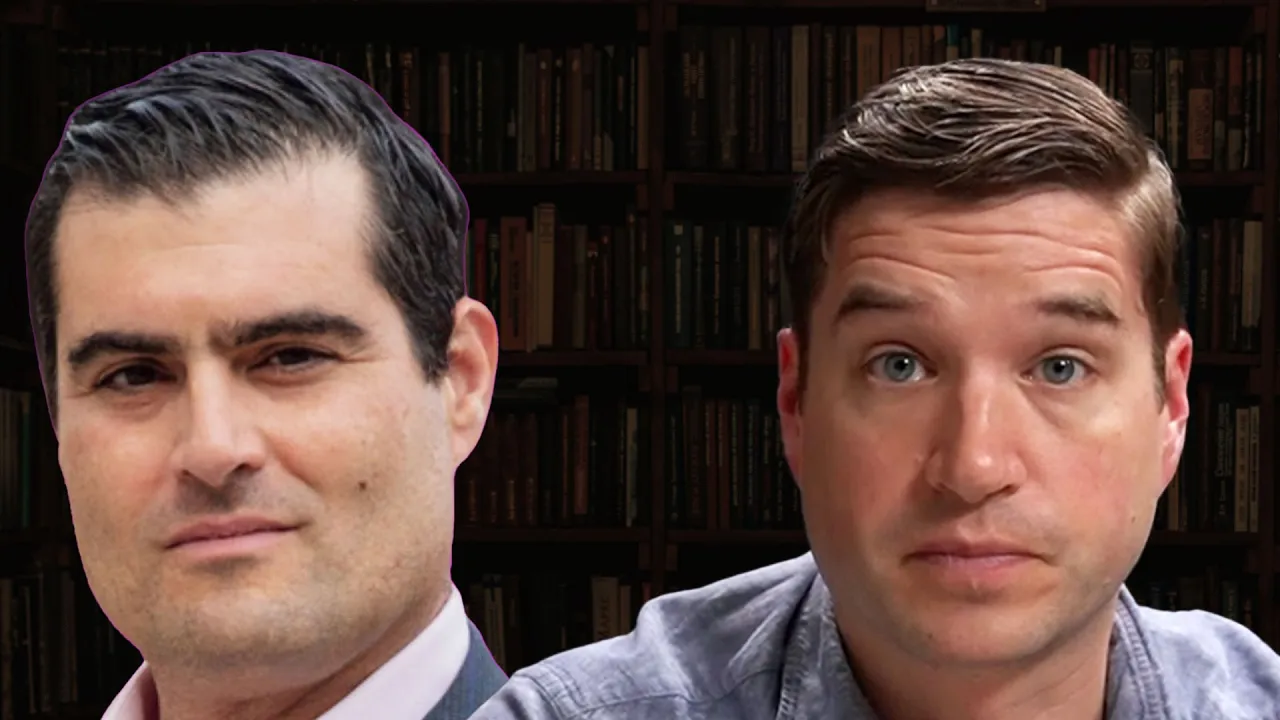
How Nobel Prize Winners Focus | Cal Newport + Brian Keating
Chapters
0:0 Cal introduces Brian Keating3:10 Interview with Brian Keating
26:17 Biology and a meteorite
47:5 Georgetown and ethics
Transcript
I'm Cal Newport, and this is In Depth, a semi-regular series in which I talk to interesting people about the quest to cultivate a deep life. Today's episode is brought to you by our presenting sponsor, Done Daily. I'm a huge fan of this product because it provides you with both a system and daily coaching to implement the type of productivity ideas I often talk about.
I'll tell you more about that later. For now, I want to talk about today's guest, which is Dr. Brian Keating. Now, Keating is a big shot scientist. He's currently the Chancellor's Distinguished Professor of Physics in the Department of Physics at the University of California, San Diego. He's also the principal investigator of the Simons Observatory.
He wrote this cool book back in 2018 that was called Losing the Nobel Prize. It's a book about the research he was doing. They were measuring the signature of the spark that started the Big Bang. They have this really exciting signal and people were all whispering in their ears like, "You're going to win the Nobel for this.
This is a big deal." They found an artifact in the data that ruined it. He wrote a book about that, about thinking you're about to win the Nobel Prize and not. It's a cool reflection about science at the highest levels, the reality of ambition. Anyways, interesting guy. Now, if this name sounds familiar to you, it's because in addition to his science, Brian is also a prolific public expounder of astronomy and cosmology and physics.
He has a podcast called Into the Impossible that has on some of the highest level science guests you're going to find. They have deep conversations. It's a really cool show. He also occasionally slums it and has on people like yours truly. You should check out that episode though. It's a good one.
He's also a regular guest explaining things like physics and cosmology on some of the world's biggest podcasts. You might have seen him chatting about this stuff with Joe Rogan or Andrew Huberman recently. He does all the big shows. But the reason why I had him here on the best show of all my own was to talk about his latest book, How to Focus Like a Nobel Prize Winner.
It's a book that's based on interviews with real Nobel laureates where he asked them about their own thoughts on things like focus and distraction and what it takes to produce work that really matters. Clearly this is right up my alley. These are exactly, I gave that book a cool blurb.
These are exactly the type of ideas that my book Deep Work was eventually based on. So we get into that, but because I can't help myself, we talk about a lot of other things as well. Like Brian's unusual path into academia, which has a twist to it that I still can't believe.
You'll see I'm kind of incredulous in the interview. We talk about like how the best scientists do what they do. We talk about why neither Brian nor I went to our graduation ceremony or hooding ceremonies after we earned our doctorate, like what the psychology was behind that. And we both get into our plans for like, Hey, what are we going to do next?
We're both full professors. There's no more promotions to get. We both have large platforms and do a lot of public facing stuff. Like what are our collective plans? So, and so we get into a lot and do a little psychoanalyzing. I don't know. It's a great episode. Anyways, you're going to like it.
He, this guy lives a deep life. He has information for you about living a deep life yourself. I had a good time. I think you will too. So let's jump right into my conversation with Brian Keating. Brian, it's good to see you. Thanks for, thanks for coming on the show.
Brian Keating: Yeah, it's a pleasure to be here with a fellow professor. It feels like we should have a faculty meeting at some point during this conversation. Brian Keating: Well, to make you comfortable, I will simulate a faculty meeting by picking on a very small point about how you run your day and then harping on it for 20 minutes in a way that makes it seem like you just took away the voting rights of half the population because that's what will make people feel like we actually have a faculty meeting here.
Blow little logistics way out of proportion. Brian Keating: Low stakes, high conflict. Brian Keating: Yeah. Now, I mean, the proximate reason you're on is recently the second book in your Into the Impossible book series came out. It's called How to Focus Like a Nobel Prize Winner. Clearly, this is in my wheelhouse, right?
I mean, it's the intersection of science and deep work and how to produce good things with your mind. But I also use that as an excuse to get you on here because I have so many things I want to talk to you about. I think your life is interesting.
I think your path is interesting. I think your thoughts about what you're doing now is interesting. So if you'll indulge me, I want to do what I do with a lot of my guests and actually take my readers a little bit through your life and try to extract some lessons from it until we get to some of your more recent work.
So hopefully you're ready for that. Brian Keating: Yeah. Brian Keating: Brian Keating: Here's where I want to start. I think people are interested in academic paths, serious academic paths as just a particular deep life that people take. I like to unpack that a little bit. When in your early academic journey did you have that moment of, "I think I'm going to make a run at being a professor." Brian Keating: It was very late.
It was probably mid-20s, late-20s after getting my PhD. I always thought being – so I'm an astronomer. I'm a cosmologist and that means I studied the early universe, where it came from, what's happening to it, is it going to end, should we keep paying our taxes, et cetera, et cetera.
But I never thought you could get paid to do this, Cal. I never thought you could get paid – and really, 90 percent of the professionally employed astronomers are professors, effectively, or aspire to be professors someday. So I never thought you could get paid to be an astronomer, which is what I love to do, which is what would get me into that coveted flow state as a kid, just using a telescope on a dark night before iPhones and stuff and just sketching into a logbook or whatever.
But I thought like, "Yeah, someone is going to pay me to do that. They're going to pay me to be an ice cream taster or ride the roller coaster at Six Flags." I never thought it was possible. I never entered my realm, which is really weird because my father was a very famous math professor.
I didn't grow up with him. My parents were divorced when I was young. He split, moved to the West Coast. I stayed with my mom and was adopted by my stepfather. He was not a professor. Smart, smart man. But he and my mom never really mentioned that, "Oh, this could be a particular avenue for a career." But you were going through a doctoral program not thinking about yet professorship.
What were you thinking? I had no idea. I just was used to being in school. I loved learning. I loved scholarship. I always was a scholar. I was always intellectually curious about so many different things and I was doing proper scientific research with a telescope and hypotheses and doing all that stuff that they teach you but you never use.
But I was doing it for fun, trying to figure out how far away is Proxima Centauri. Can I see it from northern Westchester County? It was just very curious to me. I had to teach myself trigonometry, et cetera. I wasn't really put along the advanced math track. Again, ironically for the son of a math professor at Cornell and one of the founders of SUNY Stony Brook.
But I never really came to my attention that you could actually do this, let alone that it would be something that I would be doing. I've been in school. I joke now, this is my 49th grade. I've been in school continuously for 49 years. So I never really thought that was a possibility.
And then when I did feel like it was a possibility, it was only during my second postdoc. It really, I didn't think- So you're doing postdocs? Yeah. Even without it. By the way, you're ruining all the advice I give to my listeners. Because the one thing I come back to again and again is don't go to grad school without a plan.
It's not a place to, so you did the opposite and it was fantastically successful for you. So everyone in the audience, Brian is a bit of an exception. Survivorship bias alert. Survivorship bias alert. Exactly. All right. So you're in your second postdoc. Yeah. Yeah. So then how does tenure line academia enter your world?
So I had been fired from my first postdoc at Stanford because I was sort of equally, so I should say what a postdoc is that people don't know. So in the hard sciences and then, you know, computer science, I'm sure it could be similar. But in the hard sciences, you know, physics, math, chemistry, et cetera, you typically have this waylay station between graduate school when somebody pays you and tells you what to do or at least gives you the rough parameters of what's acceptable for a thesis project.
And you don't have to really come up with original topics, but you must solve things that are original and for the first time ever done. So it's very challenging to be a student. But it's not just like most people think, you know, oh, grad student, that's just like really hard homework problems in undergrad.
No, it's totally different. It's very, very little coursework, actually. That always surprises people. Yeah, it's extremely different and different. But your goal is to start learning how to do research. Like when I got my pilot's license, which was also as a graduate student, the day I got it, you know, the flight instructor told me, this is like, this is not graduation.
Like, you're not done. Like this is, if anything, it's the beginning and you're at your most dangerous, you know, the valley of death is right after you get your pilot's license until you have about 800 hours of total accumulated flight time. So as a grad student, you're kind of in that purgatory.
And over, you know, 400 years since, you know, the tradition of, you know, really master and student and apprentice, et cetera, they've developed, you know, this tool that kind of is the station between graduate student and professor potentially. And that's called a postdoc. So postdoctoral, meaning after your PhD, you can be a scholar, get a fellowship, scholarship, or just work for an employer.
But during that time, my, my, your goal is to sort of establish your own ability to create new novel research programs with the intent that you're going to sort of prove out your ability to get to that next level, which is to be perhaps a faculty advisor when you would have, again, the opportunity to then mentor graduate students and postdocs and teach undergraduates.
So all these things put together this, this postdoc, but in a way it's, it was sort of the most free time I ever had. Yeah. The free meaning freeing, not like, oh, I have all this time to scroll, you know, it was, it was, it gave me so much liberation that now I had the horsepower intellectually from my PhD program.
I knew what were the interesting topics in the field and I could actually accomplish and follow through them with, with enough perseverance. So at Stanford where I was hired right out of Brown, I started to work and think, oh, I love this new idea. I have this new idea that you could actually measure what happened at the moment the big bang occurred.
And, and this just kind of blew me away. And so I stopped researching early galaxies that my advisor was paying me to do. And so she wisely, she fired me, but she did me the solid of introducing me to her PhD advice, her postdoctoral advisor at Cal Tech. His name is Andrew Lang.
And I went to, he offered me a job and I accepted that. So I did two postdocs and it was only during that second postdoc when I could implement the experiment that I had invented as a wayward postdoc, as a, as a fruit, you know, frivolous postdoc that we implemented it and built this instrument.
And then that led to me getting an offer of the institutions to be a professor. Yeah. I think people don't always recognize in the experimental sciences, often what you're part of what you're hiring is, uh, an instrument and experiment. It's, I, I am a mass. I built this thing or I worked under an advisor who built this thing and now I know how to do it.
She's not available, but I am that it's, it's not, uh, I think people often think about all of academia in the model they had for going to college, which was, Hey, are you smart? Do you have promise? Like, are you, let's put you in a competition with everyone else?
And are you the smartest, most interesting person? Who's, who's great. We want to hire you as a professor. That's what I call it. I call it the academic hunger games, you know, it starts in high school, right? And then it never stops. I mean, it doesn't stop with Nobel laureates, Cal.
It's insane. The, the hunger games, the zero sum game. And, and the reason that's so, so pernicious is that it's antithetical to science, right? You don't win science. There's not like a zero. Oh, like, yeah, I won science. You know that even when you win a Nobel prize, these Nobel prize winners that I know, they all have things like the imposter syndrome.
They're not good enough. They don't deserve it. And so it's exactly like you say, it's, it's just like, throw them in a room and see who comes out. No, I feel like some of the computer scientists I knew at MIT felt like they deserved it. There's a few that are pretty, they have a pretty high self-regard.
They're like, I deserve it. What took you so long. Yeah, exactly. That's fascinating though. So here, here's like a psycho, I'm going to psychoanalyze you and you tell me if this is right or wrong. Do you think the fact that you didn't see yourself as competing in those games actually helped you stumble into something that ironically made you more successful in those games?
In other words, you weren't anxious about, I need to become a professor. Oh my God, am I doing the right things? Am I publishing the right papers? Am I winning the right mentor? You were just like, hey, school is great. This is fun. Oh, I can build stuff now.
This seems like a cool problem. And somehow that was a benefit. Yeah, I think that Dr. Newport is in session. I think that's exactly spot on. I had the safety net. I knew I'd always land on my feet. I had real jobs. I was a short order cook. I worked as a dishwasher.
I moved furniture. I always had a job. I haven't stopped working since I was 12. And I had a lot of real quote unquote jobs. I don't consider what we do as manual labor, but it's certainly real work. It's just of a different kind. It's a deeper intellectual, more scholastic way.
So I knew I was good at that. I knew I was a scholar and that academia is meant for scholarship, at least a good kind of academia. We can argue about some of those other departments, but the point that I always felt was I'm going to end up on my feet.
I know I'm not going to make that much money anyway. Spoiler alert, I'm at a public university and I always have been in public universities, but I always felt like this was my kind of path. I would try it. If it didn't work out, I knew I'd succeed somewhere else.
I had job offers to work for NASA. One thing I should say is that right after, as a junior, the NSF runs a program called Research Experiences for Undergraduates, REU program, or they did until earlier this year, maybe. I think they're coming back. Yeah, hopefully they'll come back. So I did that and I was at the College of William & Mary, not too far from you, but in Virginia.
And I worked for NASA, NASA Langley. We were developing ways to do non-destructive evaluation. You know, when you go on an airplane, Cal, people don't realize that you go on an airplane, you see the rivets, you know, on the airplane skin. And people are like, "Oh, the rivets hold the plane together.
It must be like, they're just like screws." And no, no, it's actually, this is glue. Like 99% of the adhesion comes from a glue surface you can't see. And the rivets just hold the skin of the aluminum in place until the glue or the carbon fiber can set. And so most people, so we were working on this procedure to use invisible radiation, basically, to do what's called non-destructive evaluation and make sure that the airplane wouldn't crack and come apart, as some have, unfortunately, in the many years.
So at the end of the, at the end of the year, I was, at the end of the summer rather, I was offered a job and like, it was going to be full-time civil service position for NASA for the rest of my life. And I love NASA. I knew all the astronauts' names.
I wanted to be a space shuttle pilot. You know, that's why I got my pilot's license. But I knew one thing about myself, that if I stopped after senior year graduation, I would never go back. And I see academia as a ratchet. And sometimes it's, I mean, you can turn a ratchet backwards, you know, it's very difficult.
But in other words, if you stopped going along that path, it's very hard to, to go back the other way. Whereas it's very easy, you know, if you want to leave academia right now, Cal, you could do it in a heartbeat, but try somebody in your cohort at MIT or whatever coming back and doing what you do.
It's functionally impossible. So I think people, people don't realize that, that the, the academic path, well, as you said, the hunger games, it's incredibly competitive, right? It's, so if you leave and come back, like, but we have people who didn't leave, who are on their star trajectory. And there's one spot, we're going to get 300 applicants from top schools.
It's, you know, I think sometimes people have this vision of academia. It's like, oh, it's like, they'll say, oh, you decided to teach. And it's like, yeah, it's like a job. Like, hey, go teach. You can, you know, get a teacher job or come back to a teacher job.
It's like, no, no, no, it's better to think about like the NBA or something like that. I mean, you're not, if you leave the, you're on the trajectory to be enough of a star to try to catch the attention of some scout, you can't go leave and play football for a couple of years and come back.
They have enough, they have enough young players. So once you, once you, after that second postdoc experiments, working well, you get your, your first tenure line position, assistant professorship position. How did you get tenure? I mean, what was that? What were you working on? Were you stressed? Were you, was it easy?
Like, what was that experience like? Yeah. Again, I was never stressed. I never tied, you know, kind of my self-worth to my career. My identity is scholar. My identity is scientist. You know, now it's a lot more things, parent, you know, husband, whatever, you know, international criminal, but, but my identity was never like, oh, my job is my profession.
And it still isn't like, I get very disillusioned. Many times, uh, with academia, as I'm sure all of us do. But, um, but I never, I never worried about tenure. First of all, the university of California, the tenure rates like 90%. I've been here 21 years. We've had one case where it was questionable.
Like, did that, would this person get tenure? You know, and that's like probably 80 faculty cases that I've been, you know, so I knew practically speaking, I'd probably get it. You know, I have to really mess up, but I was also very ambitious. Like I wanted to, you know, write books and I wanted to, you know, uh, do, you know, more speaking and, and things along the lines, similar, you know, kind of trajectory to what you did, but a little, a little older than you.
So, uh, I, I got there first, but you did it better. Uh, and, uh, but one more point I want to make that you, you hinted out about the postdoc, this weird kind of ambiguous state, Schrodinger state between student and, and teacher. And that's that there's a difference between the NBA or the MLB, right?
So MLB has like a single a ball, double a ball, triple a ball like that. Right. And then the minor. It's probably a better analogy. Yeah. But, but, um, but the, the, the difference is that it's actually pretty easy to get a postdoc. At least it is in my field.
We have, we're way, you know, kind of a, a seller's market. You know, if you're a good PhD from a decent program, there's so many professors that are going to want to hire you. And, and it's, it's almost like shooting fish in the barrel, but then it becomes even almost harder to break from say triple a ball, you know, imagine like it was easy to get into, no, it's really freaking hard to get into triple a baseball, right.
Or single a baseball, you know, even that, but we make it like, oh, it's, it's just like the stepping stone. No, it's not. It's, it's really unlikely that you'll make it. Um, we had 400 applications for one job last year here at UCSD. Uh, it's just incredibly, and, and all these people could be, and, and they're all better than I was, you know, so like, I'm not going to give up my thing, but they're all, you know, they've done eight, 80 times more, you know, papers, their agent.
I had one experiment that I created and it was, you know, basically my idea that we could build an instrument with a small telescope, small meaning affordable, you know, kind of logistically easy to support, uh, at the South pole Antarctica. So we built this telescope at the South pole based on this idea that I had inspired by this kind of arms race that astronomers have, which is that called aperture fever.
As soon as you get a little telescope, you want to get a bigger telescope, you want to get a bigger telescope. And this I had since I was a kid and, uh, and it's addictive because you know, it's, it's, you can go up to infant, you can go up to the James Webb space telescope.
Like there's no stopping the size of your telescope and the cost of your telescope, but I invented a small telescope, which would be very inexpensive. The cost of a telescope scales as the volume, sort of the aperture cubed. Um, whereas, you know, the actual collecting area is just the aperture squared and the resolution is just the aperture.
So it's a very steep penalty to build a big telescope, meaning that if I devised a cheaper telescope that could do all the work of a telescope, 10 times bigger, it could be a thousand times less expensive. And that made it more appealing, uh, at the time when I applied for funding, my first funding agent was the Caltech president's, uh, fund, which was David Baltimore who won the Nobel prize in, in, uh, medicine and physiology.
And, uh, he gave us my, my advisor and me, uh, a million dollar seed fund to start this off. And then we built this instrument and then we put it down at the South pole, right when I started at UCSD. So I knew we would just about be getting data, you know, the six year period to get tenure.
I asked for accelerated tenure, just whatever, might as well get that extra 500 bucks a month, you know, salary boost. I did the same. I get it. Yeah. We say it's not about the salary. It's about like, I want to get it over with pride, et cetera. But then our university, I don't know about yours, but our university does like really dumb things where they say, like, if you want to get a promotion, you have to go out and get an offer from somewhere else.
Like if I wanted to get, you know, George, well, if I, if I said, look, I want to get a promotion, uh, they would say, great, you know, you can get it next three years or you can go out and get a job offer from Stanford or, you know, wherever, and then we'll, we'll match that offer.
It's so foolish, but you know, this is the crazy economics of academia that people don't really understand. So I was never really worried about tenure again. And once I got it, nothing really changed. I just, you know, kept doing the stuff that I'm doing and my telescopes have gotten bigger and more expensive ever since.
All right. Let's take a, a quick break. Our only break from this conversation to talk about our presenting sponsor for today's episode, which is done daily. You've heard me talk about this on my show before. So I thought what we would do here is actually look at what they offer.
I'm going to bring up on the screen here for people who are watching the website for done daily, uh, Jesse, let's take a look at this. You've heard me talk about it, but let me show you why I think it's so cool. All right. So here's what they say.
What do you get at this website? I'll load it up here. They call it a system for success with done daily. You're not just checking boxes. You're building a way of working that actually gets stuff done. You get a coach and a system built around your life and together you'll cut through the distractions, face what's been holding you back and lock in the habits that turn someday into done.
So it's an actual coach you work with to figure out how you're going to approach and organize your life and the stuff you need to do. And then you check in daily. So let me read this other block here. This is why this really works. No bots, no automation, just a real person who checks in with you every day to keep you on track, motivated, and focused.
Your coach isn't just a taskmaster. They're your partner in progress. They'll help you reflect on what's working, help you adjust when things aren't and make sure you're always working forward. Look who's here, Jesse. Yeah, there's a picture of me. I think they pulled this from another ad. They're fans of mine.
A lot of the ideas that their coaches build their work on with you comes from my type of stuff. So you'll get, if you like Cal Newport stuff and you need to get really serious about applying it, it's a cool model. Online coaches, they make you, if you're really important to get more done, this will get you there.
All right. So that's done daily.com. Uh, I give it a thumbs up. Check out done daily.com. They are allowing us to present today's episode with only this one commercial break. So thanks guys. Now let's get back to my discussion with Dr. Brian Keating. And then you ended up with work that was Nobel caliber.
And we know this because you, you wrote a fantastic book, losing the Nobel about the psychology, but working on a project of that scale and scope and the psychology of what happens when you come close and then don't quite get that, that prize and what that tells you. A couple of questions about that.
But first, if we're just trying to deconstruct what's required in your field, there's lots of people who fall off at the grad school level, who get to a postdoc, but never get a position there, get to, you know, assistant track, but never go anywhere from there. And, and, and I should, by the way, qualify your remark about the 80% tenure.
Uh, it is true that a lot of universities have high tenure rates, but what, what that hides is because universities are very good at steering you out of there much earlier. Yeah. It is unlikely for you to go up for, by the time they let you go up for tenure, they know like you've, you probably will get this.
And what's not capped in those statistics is that people where it just doesn't click your research doesn't click. You're not producing interesting stuff. Your, your H index isn't there. And you sort of self, uh, this may be a bad use of the term. You sort of self-deport from academia, I guess.
Right. You're like, okay, I need to, this isn't working out. Of course I'm not going to go up for tenure or whatever, but anyway, people, so people fall off there as well. What is the court? What is your advice? Um, like if like hardcore ambitious advice, I want to be a star, you know, cosmologist, you know, experimental physicist, astronomer, what is it?
What are the things that matter? What doesn't? What are the myths? What are the realities? What's like the hardcore technical advice for the aspiring young scientist? I think the number one thing is, is to focus, you know, to cultivate the rare and valuable skills that make you unique rather than trying to be the kind of Renaissance man, you know, who can quote Hungarian, you know, literature and can also, you know, build a, a bellometer system that works at 50 millikelvin.
Yes. The curse of Oppenheimer, right? Like I need to read, I need to be able to read like ancient verdict script and like be a great violin player or whatever. It's like, no, no, no, that's don't do that. Exactly. Exactly. So it's just like, again, let's keep using our, our favorite, you know, baseball analogy.
It's like, you could be a great shortstop, you know, but you shouldn't also try to be, you know, a great, you know, a great right fielder. Okay. You could do it. You have athletic ability that you have horsepower to do it. So for me, it was cultivating just this relentless curiosity about one subject, which as you know, like, yes, I'm a cosmologist.
So I'm just an expert in cosmology, but along the lines of cosmology, there's, you know, chemistry, there's thermodynamics, there's quantum mechanics, there's nuclear physics, particle physics, there's all the branches of physics, physics, I joke, except for biophysics. Although it may be the case that biology came to earth via a meteorite, which reminds me, you can get a meteorite if you have a .edu email address.
But this is clear emphasizing, make that offer a little bit clearer. Okay, we're going to do this product placement. Okay, so I don't have, you know, as many books as Cal and I don't have all the, all the cool stuff that Cal does, but, but I do have meteorites and these are meteorites that are actually the villain of, you know, of my first book.
These are the the reason that my team did not win a Nobel Prize is because microscopic versions of these meteorites masqueraded as a signal we were attempting to confirm, right? So the most dangerous phrase is, is in science is Eureka. I have found it, you know, like, because that means you were looking for something and you found, okay, you might've found it, but you might be subject to confirmation by it.
So anyway, that if you confirmed would have been a huge deal. Yes, exactly. Right. So the signal was the spark that ignited the big bang. So we know the big bang occurred. Uh, we know that the universe is expanding, getting bigger every day, and it's getting bigger at a faster rate every day.
So if you move, you know, wind the movie back in reverse, you come to a time when all the matter in the universe, all the galaxies, all the particles, all the, everything in the universe was all in one place. Effectively, that's essentially what Lemaitre and others and, and Gamov and, and others coined as the big bang.
So the big bang, the instant, but we don't know what caused that massive explosion, if you like, to take place. So the theory behind that is called inflation postulated by MIT professor Alan Guth, uh, 45 years ago now, and it has yet to be confirmed or really proven beyond a reasonable doubt.
And we claimed in 2014 that we did discover the spark that ignited this inflation by way of detection of what's called gravitational radiation or gravity waves. And, uh, spoiler alert, we had to retract it after being, you know, on the front page of the New York Times and everybody whispering that we'd win Nobel prizes.
And so we had to retract that. But the reason we thought we saw it is that gravitational waves and these micrometeorites, they both make this pattern in the cosmos that we could be misinterpreted without additional data as the spark that ignited the big bang itself. And you got the additional data and it was not what you told, but now you have meteorite pieces.
We have meteorites. So if you go to my website, brianking.com/edu, if you have a .edu email address and you live in the USA, you're guaranteed to win one of these beauties. So these are 4.5 billion years old. They're older than the earth cow. So this is some of the material of which the earth formed out of in the proto solar system nebular cloud.
And some of this material is very exotic, highly magnetic, and some of it is very similar to the iron molecules in the hemoglobin molecule that's in your blood. And that's because your blood also came from the raw materials from our early solar system. So this meteorite you'll get at my website.
If you don't have a .edu email address, I do send them out on occasion as well, but guaranteed, because I want to support the younger version of ourselves. So you were kind enough to blurb my latest book, Focus Like a Nobel Prize, my fourth book, and I won't read it, but you do give the most delightful blurb.
I'll read it. It's short. Do you mind if I read your own writing, Cal? I love hearing my words read. So how do you win a Nobel Prize? Focus on what matters and avoid what does not. Keating makes a compelling case that the habits of the world's best scientists hold great value for the rest of us.
Cal Newport, New York Times bestselling author. And what's so interesting about this blurb, I should contrast that with the blurb on my first edition of the, so I should say, the books are written by me with the help of so far 22 Nobel Prize, I think I've interviewed more Nobel Prize winners than anyone on earth.
And that's for my podcast, into the impossible. And every time I interview nine, a cohort of nine, I release a book. Nine is my favorite number. I was born on September 9th, 9/9. The book came out on 9/9. So, uh, and this is the second book so far. The second book so far.
So now it's 18 people. So the first book, I had our mutual friend, James Altucher write the forward to, but also Barry Barish, winner of the Nobel Prize in physics for detecting gravitational waves. And that were actually there, unlike the ones I claimed that I did, we detected. Okay.
So why do I bring this up? So he wrote the forward, Barry Barish. He's a LIGO Caltech professor at work with Kip Thorne, who's behind the movie Interstellar, all the graphics and that, uh, incredible intellect, who I also interviewed in this book. And, uh, he wrote the fourth. So I said, well, for my second book, I'm going to get another Nobel Prize winner to endorse and put a blurb on the front cover of the book.
So I asked professor Donna Strickland and she's a professor at the University of Waterloo in Canada. I asked her, you know, she did an interview with me about two years ago now. She's in the book. She's one of my featured, you know, favorite authors or favorite contributors in the book.
And I asked her, um, to write the forward. And like two weeks went by, I didn't hear from her. And she wrote back literally, uh, her, uh, her assistant wrote back. Professor Keating, uh, Donna Strickland is, uh, very honored that you would ask her. Um, but she's in a period she's focusing on deep work, basically that she's focused on deep work.
Yeah. And I thought this, I wish I had that before I wrote the book or the, you know, you have to, uh, finalize the book before it's printed, but that would have made it in the book as an example of these laureates applying these tools, tactics and tricks and hacks and habits, but also just lifestyle that you have cultivated and you have spoken about.
And now I get to, you know, kind of share their stories with the world. So long winded way of saying this was, you know, kind of, uh, not, not really aligned by the way, with me being a professor. Like when I wrote my first book, my, I asked my department chair, you know, who's the son of a Nobel prize winner, uh, who invented the laser.
I said, you know, can I get some time off or some sabbatical? And he said, no, the only thing we will, we won't punish you for writing a book, but in science, they don't, we don't write books. Yeah. People don't understand this, but they're like, Oh, you must Georgetown must've been happy to promote you because of your books.
I said, they could care less because it's not like there's a guy at your university, like the president who was like, do I like Brian? You know, do we want to promote them? No, it's, it's a confidential letters from top professors in your particular academic niche, giving an honest appraisal of your academic contributions.
They don't care that you wrote a book. That's not what they're asked to do. They, they look at your published research and said, is this person, uh, basically, they rank you, what level school is your work? I mean, it's because, you know, we're on the other side of this now as, as you know, full professors, basically it's people who are ranking the candidates of like, yeah, this is someone who would get tenure here, here, but not there.
Like you could just put exactly, you know, it's like batting average, they stick with the MLB or whatever. Uh, so just like, you know, you're not going to get a hitting title because of your, your work you do in the field. Like no one cares. Like, it's really like, what did you publish?
How exclusive, you know, exclusive were the places? How many people cited it? What are like the other expert scholars think? So yeah, they don't punish you. Yeah. They don't, they don't mind. They're, they're confused by it. My, my, my doctoral advisor didn't know I was writing books. So she saw one of the MIT co-op, like, oh, are you writing books?
Like what, as long as it's not getting in the way of doing your work, right there, you know, they're, but it's really the same as being like, I'm pretty good triathlete runner. They're like, oh, that's great. Like, cool. That's a cool thing about you. Has nothing to do with, with, with, with your job, but okay.
Let's stick with this focus thing though. Right. Okay. Because like you said, focus matter for what you did. It mattered for the Nobel prize winners you interviewed. One of the things I took out of the book is you might think when you see that title, that you're going to hear a lot of stories.
That's about these Nobel prize winners talking about how they can, you know, summon an intensity, like a laser beam that they can bore right through. It's not what a lot of these stories are about focus. They're talking about as much what they choose not to do as they are about, oh, how do I actually like concentrate, you know, in the moment?
Talk to me about that. Like, am I picking that up? Right. Do you, do you pick up like that somewhere? Like what, what's going on here with focus as activity selection, as much as it is cognitive activity? Yeah, you're absolutely right. So Donna Strickland, again, the woman in, by the way, she's only one of four women who have ever won the physics Nobel prize in 124 years.
So it was pretty hard to get, you know, to get her to sit down and focus on it, but she did. And ironically, yeah, her invention was for basically the science behind the tools, technology behind LASIK surgery. So late, what is LASIK? LASIK is actually adjusting the focus of your eye by cutting away the corneal material that actually does most of the focusing.
You think the lens in your eye does it? Actually, most of the focusing is done by the cornea and the lens is the only adjustable part. The cornea is the rough kind of order of magnitude focusing that occurs first. So she invented with her advisor and her colleagues, the LASIK, you know, it's called chirp pulse amplification that takes an enormous amount of laser energy, but you don't want to blast into somebody's eye.
You know, if someone told somebody, you know, 50 years ago, we're going to take lasers, blast it in your eye. You're going to pay us a thousand bucks and you're going to be super happy. You know, people would be rightfully kind of confused about that, but she knew how to focus not only in intensity, like a magnifying glass and an army man or an ant, if you're evil, but, but how to focus it in frequency space.
They found that what they had to do is make this chirp. So if you ever hear a bird chirping, it's not a sine wave, it's actually a burst and then it's very sharp and then it decays really quickly. So it's like chip chip. Like, so if you look at the frequency spectrum, it's also the frequency content of the Fourier analysis of it shows that it's a compressed focused amount of frequency.
So she had it in, in real space and in the position on your cornea, plus the frequency. And she found she could get the amplification necessary to blast just the tissue and not destroy the retina and leave you blind. It's incredible what she did. So, um, what else does she do?
Well, she also thinks a lot about how to cultivate the next generation of scholars and how do you actually, you know, cultivate somebody who's going to be on a future Nobel laureate or just to be a productive contributor in science. So science education, as you and I know, I joke that we have the, the second oldest profession, right?
I mean, we're, we're basically doing with this guy. So I love finger puppets, Cal, as you know, from being on the podcast way back when, uh, this Galileo, if you're, if you're listening, I have a finger puppet of Galileo, he's holding his telescope, which he didn't invent, but, uh, he did improve 10 X from what the, uh, the Dutchman named Hans Lippershey had done beforehand.
So what did Galileo do to pay the rent? He was a professor, but not only that, Cal, I don't know about you, but he had his students live with him. I don't know how Mrs. Newport would feel about that, but, uh, certainly Mrs. Keating wouldn't like that. So, uh, so we don't have any borders here, but that's how he paid the dues basically until he started writing a book called the Sidereus Nuncius.
And then later the dialogue and that then made him wealth, you know, somewhat wealthy, not, not, he was never super wealthy, but his job teaching was, you know, here, I have this real innovation, Cal. It's, it's called, you know, chalk. And it was, you know, it's basically one, a guy with a rock in one hand riding on a big giant piece of black rock.
Right. And so now we do very, very far advantage. He couldn't even recognize PowerPoint. I'm sure. That's exactly the same thing. But Donna Strickland is thinking about how do we change, you know, education so that we cultivate the skills that are necessary. What other countries are doing things better?
You know, she's in Canada, uh, but she's, you know, she's thinking about education more globally. Um, and, and it's just fascinating to see how that's become almost like her hobby. Now there are, there are, there are laureates I interviewed in the book who have actual hobbies, you know, that would, uh, you know, that I would count as a hobby.
I don't really feel like I would spend my past time, you know, if I could watch the Padres, you know, or I could watch, you know, uh, learn about education for the next cohort, I don't have her kind of, um, you know, charitable nature maybe. But, um, but Brian Schmidt, for example, who, uh, co-discovered the fact that the universe is not only expanding, but it's accelerating at an increasing rate and someday may either rip apart or end in a heat death of the cosmos.
Uh, he discovered that, uh, using supernovae. He grows wine. He, he grows grapes for wine and he's an expert vintner and that's, he's just obsessed with it. But what does he do? I asked him like, how do you find the time? Cause he's the provost of this Australian university.
He's still a research scientist. Nobel laureates get asked to do, you know, speaking gigs, you know, even worse than you do. And he's growing one. He's like, I basically have a calendar. That's my to-do list. So what do you call that? Time boxing. So they're using these tools. The funny thing is that they didn't know they were using these tools that you've been talking about, you know, and the other person who blurbed the book, Ali Abdaal has been working about, uh, on for a long time and Sahil Bloom and, and Nir Eyal, all these guys use these tools, but I've realized academic, the Nobel prize winners don't know at Cal.
So all the more so, how does a freshman, how does a grad student, how's a postdoc, how's an assistant professor, how are they going to learn these tools? And then so I basically wanted to write this as a self-help book. I mean, it's one of the things that happens to me when I talk to business audiences.
Cause you know, a lot of my writing, it's like, Hey, here's what's going wrong in the world of work because of technology. And you know, here's what you should do to get around it. But most of my ideas that I'm bringing in that world, it's come out of how do you succeed in academia?
I mean, I wrote a New Yorker essay about this last year called how I learned to concentrate. And it was, I traced like every major idea I'm known for in my books to a five year period as a graduate student at, at MIT, you go to the business world, like you're a wizard.
Where did you even come up with these ideas? But you talk to the Turing prize winners I worked with or the Nobel prize winners you work with. They're like, well, that's the only way to do anything significant is like, you got to be very careful and picky about what you choose to work on.
Problem selection matters. And then that needs to get like the bulk of your focus. That's what matters. And then other stuff fits in the time you have. And if it all doesn't fit, then you got to drop some things. But like at the core of what you're doing is once you found the right project is like, that's, that's what matters.
That's where all your value comes from. Basic idea, if you're a Nobel prize winner, but if you're a business executive, you don't know this, you're thinking like, well, but answering emails is important and being commutative and being busy is important. So like to what degree do you think these ideas expand?
I mean, I think the academia produced them because it makes sense. This was the world where we first began thinking about how to use the brain to create value. And now 2000 years later, most of our economy is based around using your brain to create value. So like we have a head start on thinking about this.
How far does it expand? I mean, who, who, who could profit from these ideas? How broad can we go? I think you can. Some of the challenge that we have is that, you know, I joke that like everybody's above average in academia, which is part of the reason that many academicians suffer from the imposter syndrome.
I mean, Barry Barish told me that he felt the imposter syndrome after winning the Nobel Prize worse than before he won the Nobel Prize. I said, Barry, how can that possibly be? And he said, well, when you win a Nobel Prize, you go to Stockholm, you have to dress in this white tie, white tails, you eat this reindeer dinner, you meet the king and queen of, of Sweden, and you get this giant, you know, flavor, flave, like medallion, and you get a million dollars plus, you know, potentially.
And so they want to make sure you're not going to come back and say, hey, you know, where's my money? You know, where's my medal? Where's my reindeer? And so they make you sign this ledger. And in the ledger, all the names of everyone who's ever won the Nobel Prize in your field.
So Barry's a super curious guy. So he turns it back, he sees Feynman, you know, he goes back, Marie Curie, he turns it back, he sees, you know, Fermi, all these just like Titans. And then he sees Albert Einstein. And he's like, I don't belong in the same breath as Albert Einstein, let alone the same book, you know, finger puppet here.
And so how I'm not worthy. And I said, Barry, I got to tell you some good news. Like Einstein had the imposter syndrome. He's like, what are you talking about? I said, he felt that Isaac Newton was the greatest contributor, not only to science, but to Western civilization. And he's like, ah, it's amazing.
And I said, but that's not all. Because Isaac Newton had the imposter syndrome too. And he was like, oh, you got to be kidding me. That's not it. And I said, no, he failed to live up to his idol's expectations. And his idol, Barry asked, who's his idol? I said, Jesus Christ.
Newton so wanted to emulate Christ, he couldn't create miracles. But he spent most of his writing on religion and alchemy and almost, you know, side pro, yes, his side quest was calculus, gravitation and optics. But he died a virgin. He said, that was the only way I could imitate.
Now his personality probably helped with that because he was kind of a, a schmuck as, as many people described him. But, uh, but I think that they, you know, so to, to be at this level, Cal, as you know, like when you walk down the hallway, you know, too, it's, it's hard to be like, you're simultaneously extremely competent to get to this level, but you're surrounded by so many people that are also extremely competent.
It's like, if, if you're so good that they can't ignore you, right. But everyone's so good that they can't ignore you. You get ignored. And, and I think that's a weird emotion because we all do have a, you know, you have to be a good scientist. You have to be humble against mother nature who always crush the hell out of you, squash your dreams and, and leave you, you know, groping and groveling for, for, for relief.
But you also have to be, have a little chutzpah. You have to be a little bit arrogant that you can take on these problems that have crushed, killed and defeated people who came before you. You know, the whole point of that story about Einstein, Newton, Jesus, you know, it's like, if Einstein was right, you know, I wouldn't have a job like, okay, you just look up what Einstein said, or, you know, but if he thought Newton was right, he wouldn't have created general relativity.
So I have that balance of, of swagger, but also humility. I like the swagger point, um, and balance it with humility. But I mean, it just reminds me, this was something that, that really confused my wife, but I think would not confuse you, which was, I didn't go to any of my graduation ceremonies as I, you know, I didn't go to my master's degree.
I didn't go to my doctoral degree. I didn't do the hooding or whatever. And my mindset was very much like, if I feel like that's something that's an accomplishment to celebrate, then I'm not going to make it as an academic, right? Exactly. Oh, it's so funny you say that.
Because when people tell me, sorry to interrupt, but in high school, people say like, this is the best time of your life. And I said, this is the best time of my life. Like I hope, I hope it's, you know, not true. I will, but you're a hundred percent.
I never went to my hooding ceremonies. I never did that. I was like, like, no, I'm onto the next thing, not a shiny object, but just like, I'm, I'm done. Like, I got to keep going. Sorry. Yeah. The monster minds would not have cared. It was the monster minds of the, you know, World War II era physics.
I mean, yeah, sure. They got their doctorate at some point, like on route to like, they had things to do. And so that was very much, yeah, my, my mindset, my college graduation, I completely didn't care about, even though I was graduating. Um, I think I was like top five in my class, right?
Like I didn't find college that hard. Uh, I was like this, I can't celebrate this because this is the, the easiest thing I've done that I'm going to do on the route to like what I want to do. Like everyone graduates college that you go to college where that's not, that's not competitive or yeah, you go to a doctoral program.
Yeah. I didn't get kicked out of the doctoral program. Fine. But like, what matters is like, can you get the tenure track job? Like, so you can't, you know, you can't celebrate those. Like now with my own students, like, oh, this is so great. And I love the pomp and the circumstance.
And I wear the wizard robes, but, but what is it for you now? I mean, look, let's, let me turn the psychology back on you now. So now that you've done, you know, I mean, your, your career is just, I mean, from Dartmouth, MIT, Georgia, I mean, you, and all the stuff you do in the public mind, which by the way, I feel like you fulfill what I always joke with my colleagues about, but they never do.
Very few of them do it that are real professors is that you have to give back to the public. You have to communicate in a language that they understand because they pay your salary. And if you don't eventually, I mean, you're at a, at a private institution. I, you know, they, just because it's private, there's tons of public money that flow through there.
Same with every institution, especially, you know, public institutions. But let me ask you, you know, what is your next thing? What is the thing that you would say now? Like, okay, forget about like your full professor, your, you know, you do, I think you were department, you know, chair, whatever you're doing.
What is the next thing? What is the thing that you're going to like, kind of the hooding that you're ignoring now? Like, what is the next thing that you're now going to focus on, say, that will give you that sense? Or maybe there's not one. How do you feel about that?
Well, so here's the thing about Georgetown, like why, why I'm still there and why that's working is they in the 20th century played this big role in the creation of bioethics as a field. They created this thing called the Kennedy Institute of Ethics and all the big ideas about what do we do now that we're growing like technology to manipulate DNA and these other types of issues?
How do we deal about this ethically? They are at the forefront. They said, look, we've got a big medical school, but we're Jesuit. We have these values. They kind of define bioethics. Georgetown had this idea of like, we should do the same with technology. Like we should be the institution that's trying to figure out like, how do we grapple with new technologies?
What are the ethical concerns? In part, because our law school has probably the largest technology law faculty of anywhere. We're in, we're very policy focused. We're in Washington, D.C. We, you know, we have a lot of institutes that like deal with these sort of things. So that's what we're going to do.
And I basically said, well, that's kind of what I'm doing. And my, my public facing stuff is starting with deep work. All of my books, I can really, they're, they're technology stories. They're all about, um, it's technology, doing something, causing problems. How do we react to it? Deep work is about what happened to knowledge work after it fell into a constant trap of technological distractions.
What do we do about that? A world without email was about the same thing. Digital minimalism was about our phones. Slow productivity is actually about how knowledge work broke because we had this productivity heuristic that didn't work in an age of fine granularity work demonstration because of technology. Um, like that's, that's what I do.
I said, well, good. That's what I want to do now. Um, let me help you do that. Let me help. Like, this is a good thing for an institution like Georgetown to be ahead of. So, uh, I was one of the original faculty, founding faculty members of the Center for Digital Ethics there, which is their sort of institute on campus that draws just from actual tenure line faculty from different disciplines.
And I helped create and direct a new major computer science, ethics, and society, which is the first major in the country to actually fully integrate computer science and ethics. There, there are majors that are like CS plus ethics where it's like, yeah, you're a CS major and you have to take three ethics courses.
No, no. Georgetown, we're hiring people, myself included, computer scientists who teach courses in this computer science courses that are built around ethical concerns. It's not take algorithms with this guy and then go take ethics and the philosophy part. So anyways, like, that's what I'm doing. It's been scary, Brian.
Here's the scary part about it is to do that. You kind of have to say, so for now, I'm not doing the math papers. Like the thing that I had been doing and was trained to do since I was, you know, whatever it was, 21 years old. So that's the interesting part is, you know, I'm a full professor.
There's no more promotion to get. There's no, there's no letters to be written about me from faculty in the computer science. So there's no one I have to worry about. And so I made that switch about a year or two ago and I'm kind of in the middle of it.
And one of the things I did in the switch, this might be interesting to you is I've started saying I have a quote unquote studio day and I'm, I don't, this is the day where I'm not, I'm definitely not on campus. I don't do meetings that day. I'm in my studio, I'm podcasting and I'm working on my newsletter because that reaches, you know, it's going to be read or downloaded eight plus million times a year and it's about technology and it matters.
And that's part of my job now. And so far I've gotten away with saying that, you know, but it's different. It's different. So I've gone from juggling two worlds to be like, this is sort of my new, this is my world now is, is public facing. Like how do we, if we don't understand technology and how it affects us and what we can do about it, we're in trouble.
So I don't know. It's an interesting, interesting shift. I think it's great. I mean, I think it's, you know, kind of some things that you echo and I, I try to tie into in the book as well, you know, the fluid intelligence versus crystallized intelligence. And we have this tendency in the West and maybe in general to venerate youth and, you know, the sheer horsepower of their minds and the proofs that you could do when you were 21 and also writing books and also, you know, it's different than what you do now.
Um, I'm sure you can still do it and you still have wisdom and stuff, but I'm coming to be a little bit more optimistic, not to get all David Brooks, you know, second mountain or Arthur C. Brooks, his, his, uh, namesake as well, you know, kind of the, the, the, the, the kind of challenges of, of grappling with your youth being over in that, that chapter, that season of your life of, of fluid intel.
But actually with these little, you know, digital devices and, and, you know, I, I just don't feel like there's going to be as much of an emphasis on the fluid intelligence. I mean, when I have a digital assistant always on, I have this thing with a pendant, I have my phone, I have my, you know, whatever.
Um, those are incredible force multipliers, but they don't have any wisdom whatsoever. You know, if I ask chat GP, I asked it, what did, what books has Brian Keating written? You know, it's the new Googling yourself. And it's like, he wrote losing the Nobel prize into the impossible and a brief history of time.
And I'm like, well, you know, I wish, I wish I had the book sales, you know, numbers of that, you know, it's like almost the Bible book sale numbers. Um, but, but no. So, so I think like we, and I'm, you know, you're a lot younger than me, but, but still the, the fact is that I think there's going to be a commodification of, of the fluid intelligence and a real kind of premium put on crystallized intelligence.
And what you're doing seems to align perfectly, at least with that hypothesis, that you're now leveraging all this experience, this recognition that, yeah, we never teach our students ethics. I've never once had a class. And I talk about it in this book. There's a, two chapters where I kind of give, you know, Keating's rules for life survival and academia.
And, and one of them is just like, well, why is it that, you know, that a medical student gets an ethics class? Why is it that a business student gets an, why is it that a law school student gets a business, gets an ethics class? Why don't scientists, oh, you don't need it.
Oh, come on. You're telling me like some, some, you know, P hacking, you know, which I talked to, one of the fathers of the P hacking identification, Guido Inbens, you know, he, he, in this book talks about how rampant, how, how destructive it is, not just for economics, which he won the prize in, but for society.
Like the fabric of society could be torn asunder by what you and I do as scientists and how we teach, and we don't teach them ethics. So I think it's a beautiful thing, but I think it's one that, uh, an AI wouldn't have come up with, but you're going to ironically use it and the applications of it in the AI era.
And that shows how crystallized intelligence, in my opinion, is going to be the new, you know, hot commodity. I mean, how do you, I'm curious how you think about it in your own career, right? I mean, you're, you're a distinguished professor. So now it's, people don't know these rankings, but even as full professors, there's these honorifics and levels you can get.
And this is like a university level professor. You really don't go higher than that. Um, and you have a very popular podcast and you're, you're a good popularizer, right? Because you go on the other, like mega shows, you know, I mean, you've been on Huberman, you've been on Rogan, like, so you reach big audiences, more importantly, my show, which, uh, between me and Andrew Huberman, by the way, we have millions of downloads.
So that's why I like to see it. Um, so how do you think about your career now? Yeah. I mean, I'm definitely getting a lot more fulfillment. You know, when I look at my most highly cited paper, it's got, you know, 2000 citations now. And, uh, and then I look at, you know, one episode of my, you know, if I only get 2000, you know, views of an episode, I get disappointed and yeah, it's just whatever.
Uh, it's gamified of course. Um, I think now I, I have at least one more book in me, you know, if I keep interviewing Nobel prize winners, I'll put out, oops, my camera just clinked out. Just as you said, you know, I've got this popular podcast, my, my camera, uh, I've got the lead there.
First time on a camera, Brian, come on. The buttery, the buttery bokeh. I got to get that in there to match you, my friend. So, uh, the, the focus on, you know, kind of the next stage is another, I think I want to write one more popular science book.
And this one's going to be about, you've heard about string theory obviously as a sort of a potential theory of everything. But what a lot of people don't know is that string theory is not only unproven, there's literally no evidence in support of it as we speak, but it may be permanently shrouded in the mystery of being what's called unfalsifiable.
So Karl Popper had this notion that science should be not provable because you can't prove that there's not a purple unicorn on, on Jupiter's north pole or in every, you know, in every case, but you can falsify different claims. So string theory might not be falsifiable, but there's an equal and kind of almost opposite candidate theory of everything, which just so happens to possibly imprint the signal that some people have claimed have, might have tentative hints for already.
And I want to explain that signal and I want to explain the science of what's called the Simons Observatory, which is the project that I'm the PI of right now in Chile. It's a $200 million project, 400 people on it. And it's a massive telescope at 18,000 feet above sea level in the volcanic out of common desert of Chile.
And, um, I want to explain how, how, how it could possibly be discovered because one of the consequences of this is that we may be able to discover why time has an arrow. Why does it flow in this one direction and why do we always seem to not have enough of it?
I, you should write that book. Uh, I think that's right now. I don't know how you're going to write it when you have to be a PI on the Simons Observatory. You see, see, I react to having too much to do by doing less. Uh, you react to it by somehow just making it all work.
And so I don't know, I don't know what your, what your magic is there. Uh, but that, that is impressive. I mean, how do you make that work? Uh, because you're still, you still do like the hard parts of being an academic and you write the books and you do the podcast.
Yeah. Well, I think, you know, for me, if it's not like, if I'm my free time, Cal, I have a telescope. I, I use my telescope. I, I take astronomical images and it just so happens that some of the things that I can do as a hobby and my kids are into it, you know, purely by coincidence, I never, you know, forced them to do it.
Uh, so I get to spend time with my kids, you know, learning and studying and building like this massive new telescope in the mountains of San Diego. Now, uh, it's just super fun. And I, I just loved, you know, if I retired, I'd still be teaching, I'd still be, you know, building tinkering.
I'd still be, you know, going to travel and, and I love speaking and, um, uh, I do those kinds of things. So for me, it's like, you know, it, it, it fills me up with, with, you know, gratitude. And I think that's the most important thing in life. If you're not grateful, you're not a happy person.
If you're not a happy person, it's hard to be a good person. So for me, it's, it's like, you know, uh, the other thing I should say, and that we touched upon it in your interview on my channel was the concept of a sabbatical. So Judaism is a big part of my life.
And, and one of the attributes of Judaism is the seven day, you know, cycle of which you have to, you, I tell my students, you cannot work seven days a week. You probably have to work six days a week. You probably do while you're young and you've got that, that fluid intelligence pumping away through you.
And that those, those, all those great traits, but you don't, if you are forbidden to work seven days a week, if you're in my lab and they all know it, they know I don't work on holidays and we end Saturdays. I don't work on Sundays either, by the way.
But, um, but that, that's the thing you need to have. If I, if I didn't have that rejuvenation each week, I, you're probably right. I probably couldn't do, you know, most of what I do, but I get a reset. It's like a sabbatical, literally every week. And, um, and you know, as long as I keep having the strength and health, I'll continue to do it.
Cause it makes me fundamentally full of joy to do and be able and get paid, you know, a little bit to do what I do for, for what I would do for free. As I said at the beginning, yeah. And what people often also get about these sort of academic positions, you're in charge often, right?
So it is really different than being a PI on something. There's a lot to do, but you're in charge of it. Like, here's how we're doing. There's a lot of autonomy in academia. Whereas in a corporate job, it's, I'm on these projects, which means I have to be on email all the time.
People can summon me to meetings. It's like constantly jumping through what other people need. It's the, I, I should say though, that, you know, just, I mean, I love that romantic vision, but you'd be surprised how much, you know, like while there's this Chilean law that prevents people that work 16 hours a week from working, you know, 17, it's, it's mind numbing.
And, and that's where the podcast is the relief valve for me, because I say like, I have all these telecoms and I try to use your rules, Cal, please, you know, my rabbi, you know, forgive me for the sins that I make against you. But, but the problem is, you know, I have to, there are conversations that you and I have to have, if we want to, you know, keep, keep up the, you know, keep up the, the, the, you know, what we're doing, but then there are conversations I want to have.
And the podcast gives me that to access to people like you, to people like the Nobel prize winners. I talked to Terry Tao, my first fields medalist. I'm going to have another one on. It's just incredible, Cal. I mean, I'm trying to put together this university that I wish I had, you know, for people like me and you and your listeners, because, you know, there's so much cool stuff in the, in the world.
And there's so much evil, awful, horrible news, mostly in politics and, and, and, and what we do gives us a true safe space, not intellectually safe. I mean, it should challenge you, but it gives you that safe space to think like, God, you know, no one looks up at that asteroid over there or a comet or, or looks up and sees a constellation.
I hate that Republican constellation. That's so, you know, so we have that safe space, we should cultivate it. We need more of it. And that lets the soul breathe. And I think that's what we're missing. So I'm, I'm really jazzed about podcasting as well. And I don't do it for the money.
I mean, I lose money on it. Probably lose money on, on some of the books I write, uh, if you pay me by the hour, but, um, but ultimately it gives me a great source of, of joy, fulfillment. And ultimately that's the currency of life, right? Well put and well said.
Um, we're going to wrap it, but before we do, I want to give two record endorsements for Brian to my audience here. Um, one, listen to the podcast, right? Listen to into the impossible, not just because, especially the science talk is interesting, but because it will give you a repeated exposure to life of the mind.
And I think that's something that we really downplay right now, uh, what it actually is like to use the brain to create value. It's a slow process. It's a fulfilling process. It's a life affirming process. And it's the opposite of, you know, AI supported adult social media slop. It is just, it puts you in a different mindset about human potentiality and makes you think about this other stuff as man, that kind of feels like a waste.
And then my second endorsement is, uh, read the latest book, how to focus like a Nobel prize winner, because I, you could think of that as like the source notes for deep work. Like deep work is talking to a non-academic crowd. Hey, focus is important. Here's how you do it.
All of my inspiration came from academia, right? Because that's where I was, where this is not a crazy idea, you know, deep work in academia. People like, yeah, of course, like this is, this is what we do. So if you want sort of the source material, right? Like the source inspiration for a book like that, here we've got nine Nobel laureates talking about exactly how they do this and why they do this.
And so you don't, you don't have to be interested in winning the top prize in that field in order to get wisdom. So anyways, Ryan, I love what you do. Always a pleasure to talk. Uh, thanks for coming on the show. Thank you, my friend. And thanks for the blurb on the book.
It's a very meaningful to be connected with you. And I'll just echo that the deep life that's the rarest commit commodity, the one that only human beings can do. Right. So take advantage of it. And, uh, really, uh, just so appreciate you. Thank you, Cal. All right. So there you go.
That was my conversation with Brian Keating. I love geeking out with other academics. You know, it's not, it's not as, uh, removed from your life as you might think. As I talked about with Brian, so many of the ideas that I now talk about to the world and knowledge work ideas about focus and distraction and deep work and what a diligence and not taking on too many work projects and workload management.
Like a lot of these ideas, the seed for them came out of my, uh, experiences in academia because it's the one place where the stakes are so high and the intellectual demands are so strict that you have to really care about these things like focus. You have to really care about these things like workload.
So the seeds were planted there that I, I've then helped to sow in much broader types of fields. If we'll stick with that metaphor. So that's why I like geeking out on these things, but Brian's just a really cool guy. He's really smart, by the way. He's a very well-known cosmologist and he's done some really good work.
He's modest, but he's done some really good work. Um, if you have a .edu email address, pick him up on that offer, go to his website. I think it's briankeating.com. Google his name. And if you sign up for his newsletter, he's honest about this with a .edu address, he's going to send you space dust.
I mean, I don't know where he has all this space dust from. I don't want to say that he definitely has a connection to aliens, but like he probably does, but anyways, you can get some space. I thought that was really cool. Great discussion. Check out the book, how to focus like a Nobel prize winner.
You'll love it. My blurb is honest. Check it out. Hope you enjoyed the conversation. Um, hopefully we have some more of these coming up. I don't do them every week, but we've got some ideas. So if you like them, let us know. We'll be back with another in-depth episode at some point in the near future, but the normal Monday episodes of the deep questions podcast, they'll always be there for you.
So at the very least you'll hear from me Monday. Thank you for listening. Talk to you next time. Hey, if you liked this video, I think you'll really like this one as well. Check it out.